





Flexible Duct Systems

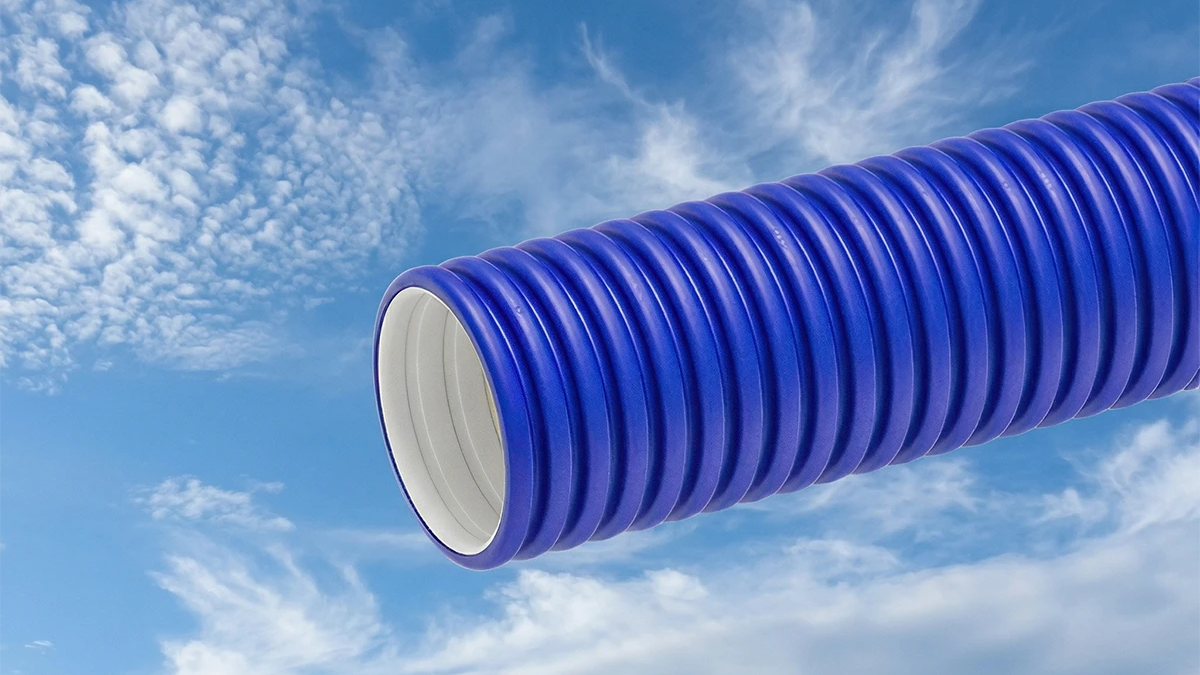
Forget lowered ceilings and complex installation work. A flexible duct system allows you to route ventilation quickly and airtightly even in the tightest spaces, preserving your home's ceiling height.
It is the most popular choice for modern residential heat recovery. The radial distribution principle guarantees exceptionally quiet operation and even clean air distribution without any drafts.
REC LFT Air Distribution Collector€48.40-€83.30
REC FP Plastic Flange€2.20-€3.30
Diffuser connection box€29.91-€35.09
Diffuser connection box 2ר75/90 made of PP plastic€14.40-€19.60
Plastic Cap for Flexible Duct Systems€2.36-€2.99
Elbow for Flexible Duct Systems€11.65-€19.52
Airflow Control Damper€14.40-€15.60
Why is a flexible duct system the standard for modern homes?
Hidden ventilation and lack of space
Old ventilation systems often take away precious ceiling height. When planning heat recovery with traditional large-diameter metal ducts, ceilings have to be lowered significantly. In many new build homes or renovated apartments, this means compromising on space and interior design details.
This causes headaches during construction. Every turn in a traditional system requires additional fittings, cutting, and careful sealing. The slightest installer error can lead to air leaks, and rigid pipes transmit sound perfectly from one room to another, destroying your peace and quiet.
Fast installation and preserved space
A flexible duct system solves this problem completely. Thanks to the small diameter, typically 75 mm, these ducts easily fit into minimally lowered plasterboard ceilings or can even be embedded in floor concrete. You preserve your space, and the system becomes completely invisible.
The antistatic and antibacterial inner layer guarantees cleanliness. Your family will breathe pure air because the inner coating of the pipe prevents dust and bacteria from accumulating. The radial layout principle – where a separate duct runs to each room from a central manifold – ensures you won't hear any sounds from adjacent rooms.
Save up to 15 cm of ceiling height – a flexible system requires minimal space compared to traditional ducts, keeping your home spacious while delivering flawless acoustic comfort.
How to put together a flexible duct system?
A complete ventilation system consists of several mutually compatible elements. In the ORO Haus range, you will find everything you need to ensure the air path from the heat recovery unit to the rooms is smooth, quiet, and airtight. Knowing the main components makes choosing very easy:
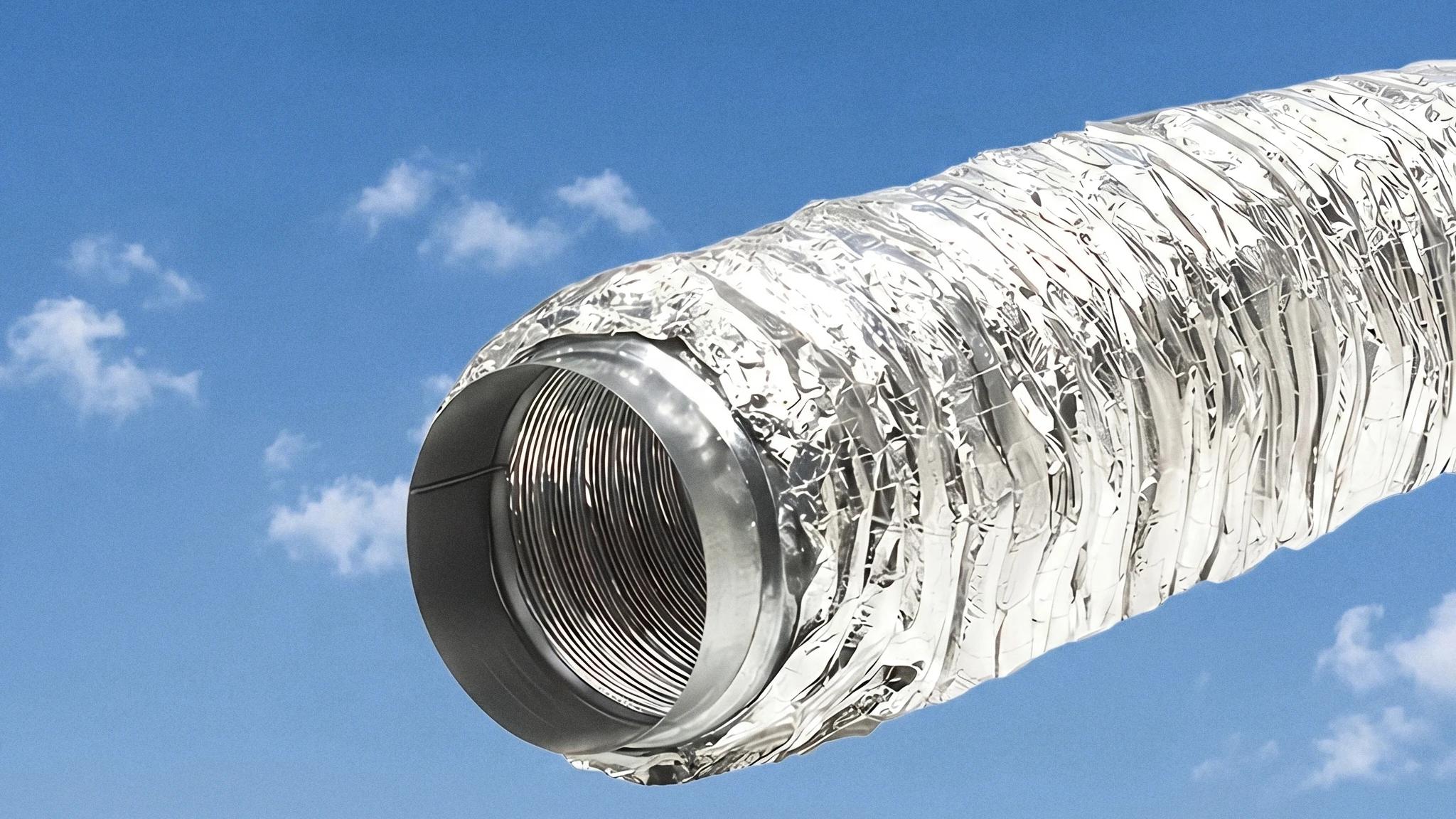
- Flexible ducts - the main bloodstream of the system, connecting distribution boxes to the rooms. They bend around obstacles, so no elbows are needed.
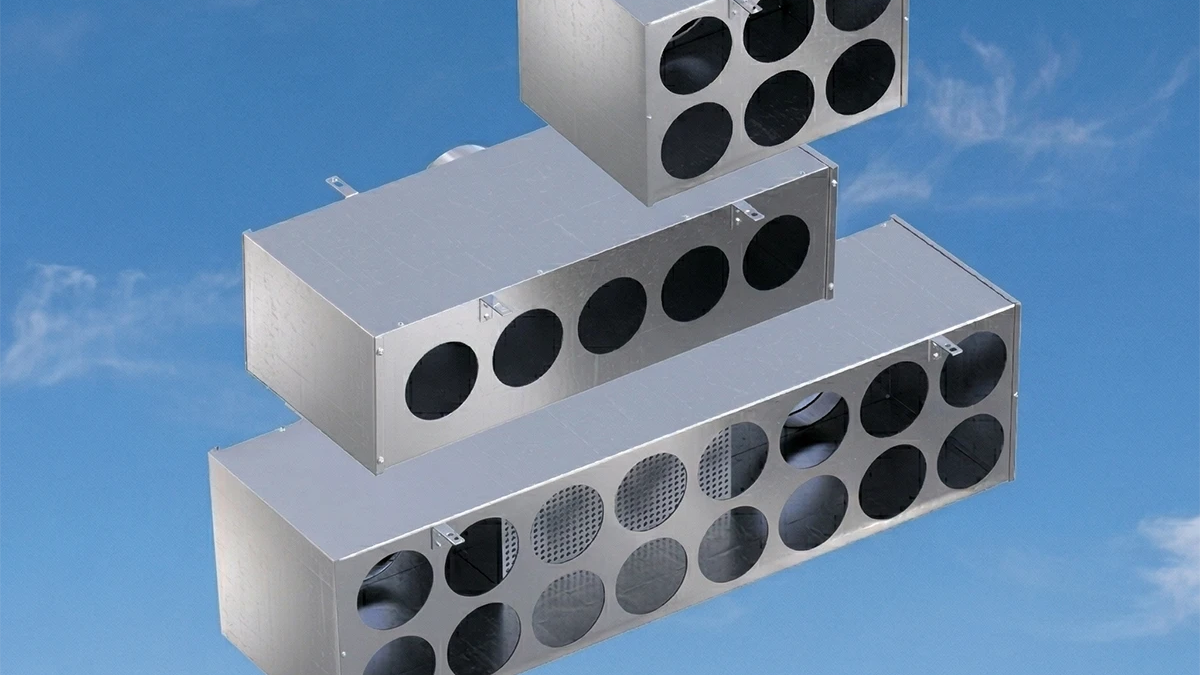
- Manifolds (distribution boxes) - the heart of the system. They evenly distribute the incoming air from the HRV unit into the smaller flexible ducts. Manifolds also act as additional noise silencers.
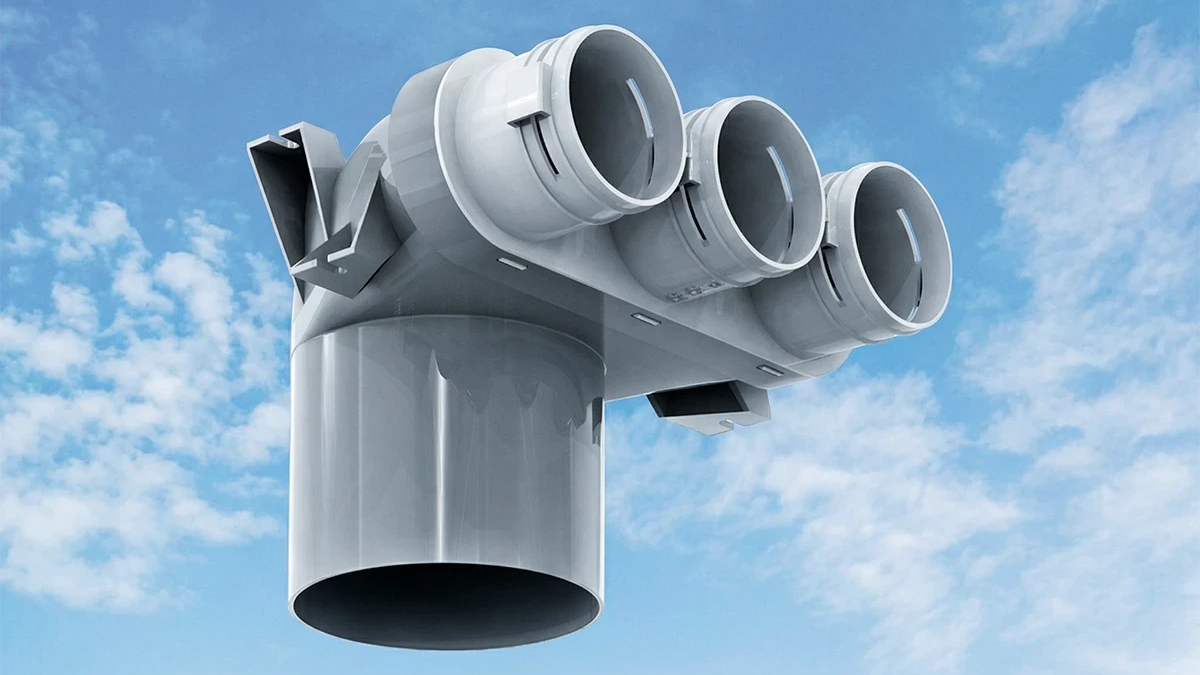
- Plenum boxes - the endpoint in the room where the flexible ducts connect. Visible finishing elements – diffusers and grilles – are later mounted on them.
- Fastening and sealing details - special rubber gaskets and plastic locking rings. They ensure airtightness without any glues or tapes.
Choosing the diameter and airflows
Choosing between a 75 mm and 90 mm system depends on the size of the home. For most standard homes and apartments, 75 mm ducts are perfectly sufficient, efficiently transmitting an airflow of up to 30 m3/h per pipe. If a space requires a larger airflow, two 75 mm lines are simply routed to one plenum box, or, if ceiling space allows, the 90 mm diameter is chosen.
System installation and longevity
The installation process
Installing a flexible duct system is fast and intuitive. Because of its flexible nature, the system is installed without special tools, using a "click" system that prevents human error and saves installers' time.
- Mounting the manifolds - distribution boxes are installed in central locations of the house (usually in a utility room, wardrobe, or corridor) to optimize duct lengths and reduce pressure drop.
- Positioning plenum boxes - the boxes are secured in ceilings, walls, or floors according to the ventilation project, ensuring optimal air distribution in the rooms.
- Routing the ducts - flexible ducts are laid from the manifolds to the boxes. It is important to maintain straight lines and avoid unnecessary loops or sharp bends.
- Sealing and locking - a gasket is placed at the end of each duct, the pipe is inserted into the box or manifold, and locked with a special ring. This guarantees top-tier C or D class airtightness.
Daily maintenance
A hidden flexible system does not require your daily attention. The antistatic surface prevents dust from building up inside the system, so the ducts themselves are cleaned very rarely – roughly every 10 years. Your most important task is to replace the heat recovery unit filters on time. Clean filters catch dirt before it even enters the ducts, keeping the system hygienic and safe for the entire lifespan of the building.


