


Duct Systems

A reliable duct system is the invisible airway of your home, ensuring the quiet and even distribution of fresh air to every single room.
High-quality ventilation pipes eliminate airflow hissing and pressure drops, allowing your heat recovery unit to operate much more efficiently.
Choose from flexible, insulated, or galvanized steel solutions and build long-lasting home comfort without any compromise.
REC LFT Air Distribution Collector€48.40-€83.30
REC FP Plastic Flange€2.20-€3.30
Diffuser connection box€29.91-€35.09
Diffuser connection box 2ר75/90 made of PP plastic€14.40-€19.60
Plastic Cap for Flexible Duct Systems€2.36-€2.99
Elbow for Flexible Duct Systems€11.65-€19.52
Airflow Control Damper€14.40-€15.60
How a properly designed duct system changes your daily life
The invisible problems behind your walls
Poorly designed ventilation reminds you of its flaws every single day, even if you cannot see it. Incorrect pipe diameters cause an irritating airflow hissing noise, which becomes especially noticeable at night when the house is otherwise totally quiet and you want to rest.
Pressure drops force your equipment to work at maximum capacity and waste energy. If the system has too many sharp turns, cheap fittings, or incorrect branches, your main heat recovery units consume significantly more electricity. Furthermore, the equipment wears out faster, while the furthest rooms still fail to receive enough fresh air, leaving them feeling stuffy and uncomfortable.
The transformation to silent, fresh air
High-quality ducting ensures absolute peace and quiet in your home. Correctly chosen diameters and smooth internal pipe surfaces allow the air to glide without any resistance. You will not hear any background noise in your bedroom or living room, only enjoying continuously renewing, fresh air.
System airtightness guarantees that the air reaches its precise destination. There are no air losses in the interstitial wall spaces or above suspended ceilings - all the fresh, filtered air is delivered straight into the living areas. At the same time, humid and stale air is efficiently extracted from the bathroom, kitchen, and wardrobe, maintaining an ideal microclimate throughout the entire building.
An A-class airtight duct system ensures your heat recovery unit operates at its most optimal mode, saving up to 15% on annual electricity costs and completely preventing mold formation in your home's structures.
How to choose: the main duct types for your project
Residential and commercial ventilation require different underlying technological systems. In this main category, you will find all the base system types, so it is crucial to understand which variant best fits your building's architectural specifics and available installation space.
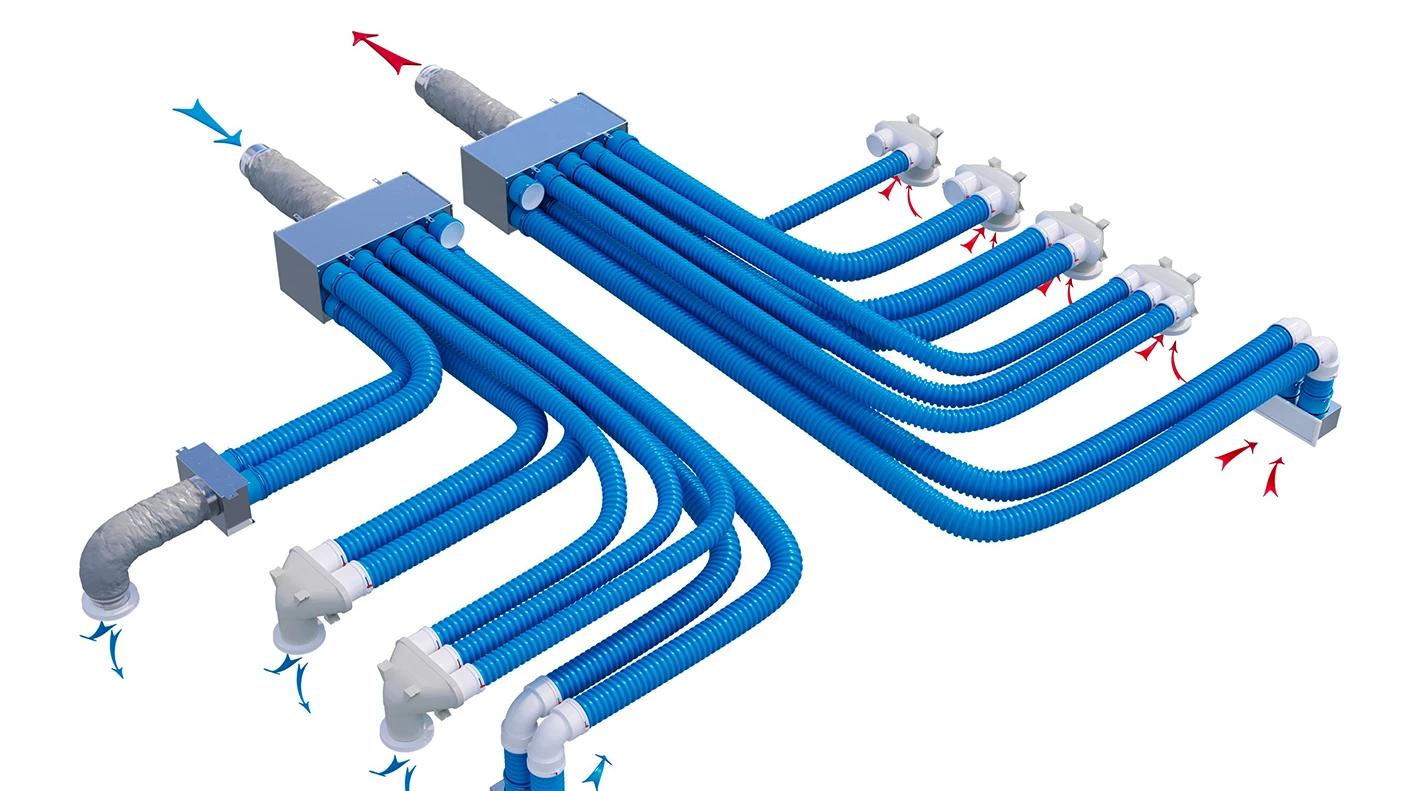
- Flexible duct systems - this is absolutely the most popular choice for new build houses and modern apartments. The small 75 mm or 90 mm diameter allows these pipes to be easily hidden in plasterboard ceilings or even embedded in concrete, while the anti-static and antimicrobial inner coating ensures maximum long-term hygiene.
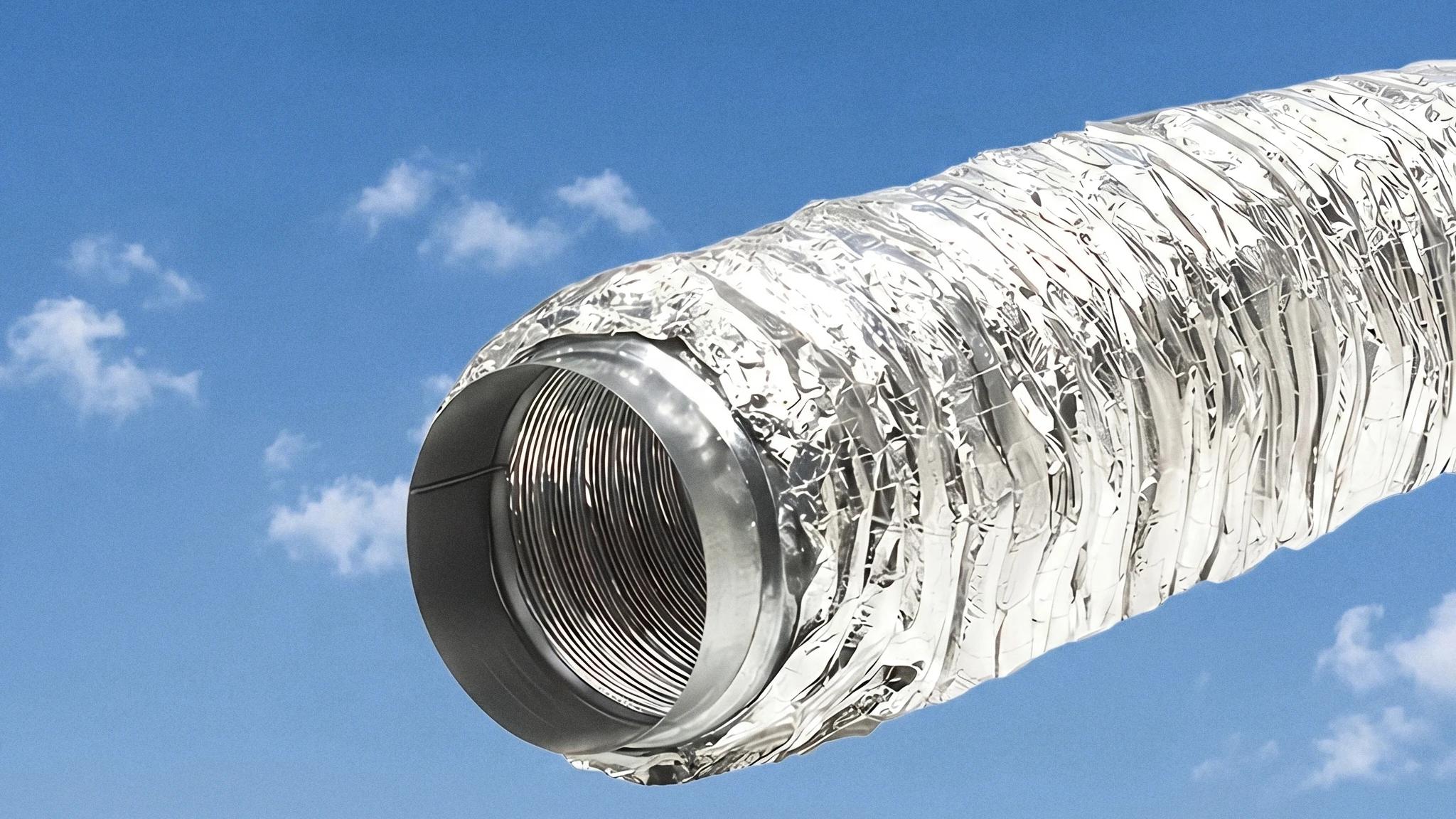
- Insulated ducts - strictly essential for the main trunk lines connecting the ventilation unit to the outside. Pipes made of special EPP or EPS materials reliably prevent condensation buildup and drastically reduce expensive heat loss when the routes pass through unheated attics.
- Galvanized steel ducts - a time-tested classic solution known for extremely low air resistance and exceptional durability. They are most commonly used in larger footprint buildings, commercial spaces, or open industrial-loft design interiors.
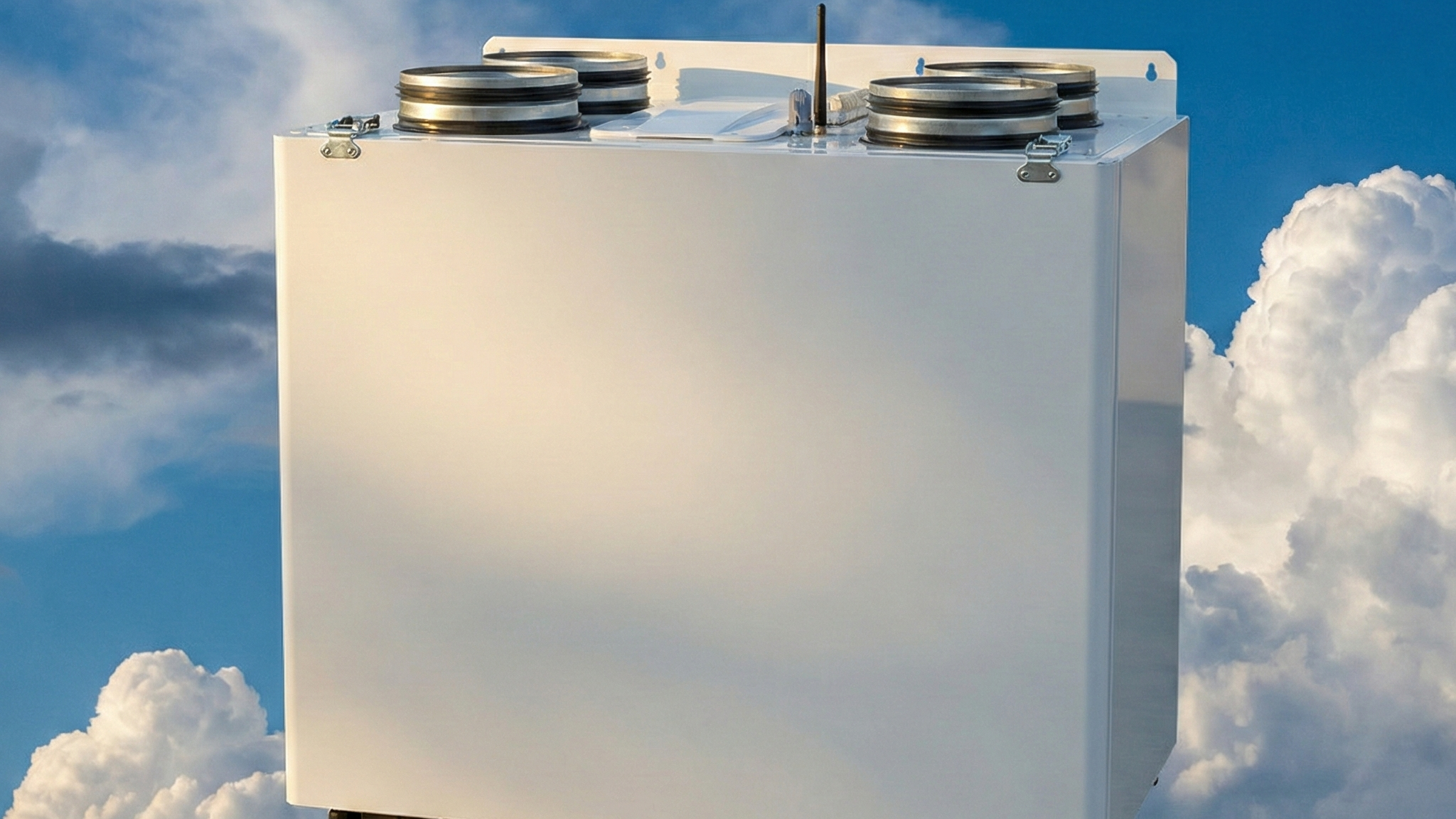
- Silencers - an invisible yet fundamental element of daily comfort. They must be mounted immediately after the main ventilation unit. Silencers effectively absorb the engine drone caused by fans, ensuring that only fresh air, and no mechanical sound, enters the rooms.
System matching and diameter selection
Every building requires a custom engineering calculation based on the intended airflow (m3/h). Before ordering specific parts, we strongly recommend having a professional ventilation design. It will specify exactly what diameters are needed and how many airflow regulators and dampers will be required for even, noise-free flow balancing across all rooms.
Installation and long-term system maintenance
Professional installation stages
Properly routing the ductwork is one of the first and most important engineering tasks in a new home. Everything begins with precise space planning so that later, during the finishing stage when installing the final diffusers and grilles, no height or compatibility issues arise.
- Route planning - always avoid sharp 90-degree angles and unnecessarily long main runs. The straighter and more natural the path from the main unit to the bedroom, the lower the pressure drop and the lower the chance of noise.
- Sealing and fixing - every single joint location must be perfectly hermetic. Use only original sealing gaskets and reliable mounting hardware from the mounting materials range to ensure the system does not start vibrating over time.
- System balancing - once all pipes and finishes are installed, a qualified specialist measures the airflows using an anemometer. Flows are adjusted at the manifolds or dampers, ensuring even air distribution according to the project design.
Maintenance after finishing works
A correctly installed and balanced duct route is highly durable and requires minimal attention from you. The most important golden rule is to start the ventilation system only after all dusty construction and plastering work is completely finished, preventing construction debris from getting inside the pipes. If you regularly change your heat recovery unit filters every 6 months, the duct system itself will remain clean and hygienic for decades, securing your investment and flawless air quality.


