

Free Shipping from €100

Plate Heat Recovery Units

Enjoy the highest heat recovery efficiency and pure air in your home. Plate heat recovery units completely separate supply and extract airflows, saving up to 95% of heat without any odor mixing.

It is a reliable and highly economical solution for those who value maximum energy efficiency and the most hygienic indoor microclimate.

How Does a Plate Heat Recovery Unit Change Daily Life?

Lost Heat and Unwanted Room Odors

Many new homeowners fear that constantly ventilating their house will lead to losing precious heat. When you open a window during winter to let fresh air in, you release hard-earned indoor warmth in minutes. Your home's heating system must then work at extra capacity to compensate, which directly inflates your monthly bills.

Another common problem is odor migration between home spaces. With lower-quality ventilation solutions, strong dinner smells from the kitchen or high humidity from the bathroom can easily reach your bedroom. This mixing of air ruins your night's rest and prevents you from enjoying complete cleanliness throughout the house.

Maximum Savings and Absolute Air Purity

By installing a plate heat recovery unit, you achieve the highest possible energy efficiency. Thanks to counterflow technology, the stale air extracted from the rooms transfers its heat to the incoming outdoor air without ever touching it. You get to enjoy continuous freshness while drastically reducing your heating expenses.

Your bedroom will always smell only of clean, peaceful air. Because the airstreams in the unit are strictly separated by plastic or aluminum plates, exhaust air particles never enter the supply stream. This ensures the highest level of hygiene for your family, protecting your living areas from any unwanted odors.

Up to 95% heat recovery efficiency - this means a plate heat recovery unit allows you to reach the highest A++ energy performance standards, making your home exceptionally economical.

How to Choose the Right Plate Heat Recovery Unit?

The market is full of plate models, but it is important to choose one that exactly meets your home's needs. Because this unit guarantees maximum heat savings, evaluate parameters that will ensure long-lasting operation even during extreme freezes:

  • Airflow Capacity (m3/h) - select a model whose capacity matches your home's square footage. For a 100-150 m2 house, look for at least 300-450 m3/h performance so the unit runs at low RPMs in daily mode and emits no noise.
  • Pre-heater Power (W) - for the Lithuanian climate, this is a critical parameter. A plate heat exchanger is prone to freezing, so ensure the unit has an integrated electrical heater of sufficient power to protect the system from ice formation in winter.
  • Filtration Class - plate models are excellent for allergy sufferers, especially if they use F7 (or ePM1) class filters that capture pollen and fine particulate matter straight from the outdoors.

Plate or Enthalpy Heat Exchanger?

While plate heat recovery units return the most heat, they do not recover indoor moisture. If your priority is absolute maximum energy efficiency and odor impermeability, a plate model is the best choice. However, if you want to avoid dry air in winter without any additional humidifiers, it is worth looking into enthalpy heat recovery units, which use the same structure but feature a special moisture-returning membrane.

Plate Unit Installation and Maintenance

Key Installation Steps

Installing this type of heat recovery unit requires extra engineering attention to the drainage system. Unlike rotary units, a large amount of water condensate forms here, which must be routed correctly for the system to operate smoothly.

  1. Utility Room Selection - the unit is usually wall-mounted. It will need not only electrical power for the pre-heater but also direct access to the home's sewage network to connect the drain.
  2. Condensate Siphon Installation - the installer must fit a special siphon with a non-return valve. This ensures water flows out freely while preventing sewage odors from ever entering the ventilation system.
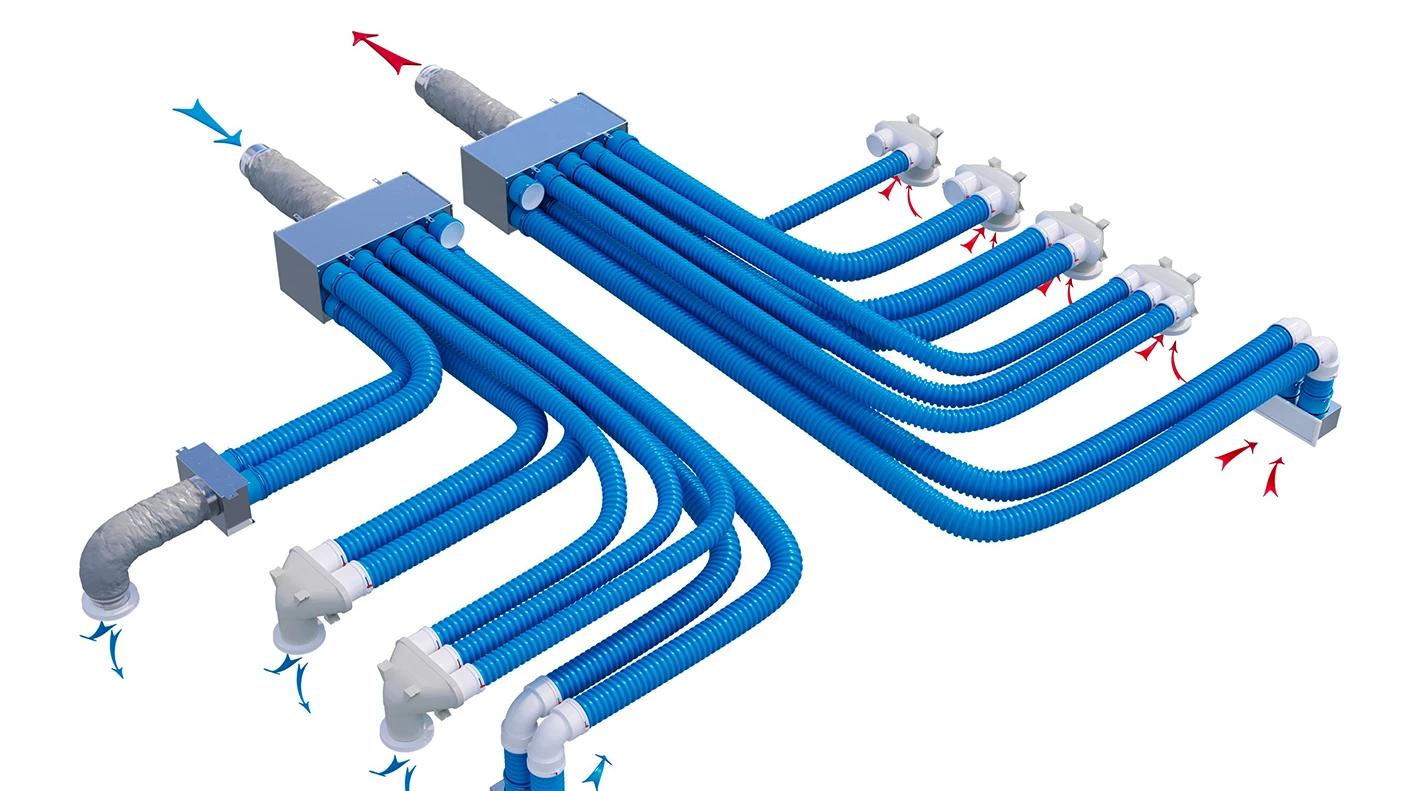
  3. [Ductwork](/kategorijos/ortakiu-sistemos) Connection - airtight, well-insulated ducts are connected to the main unit, distributing pure air to all rooms. To guarantee absolute silence, the use of silencers is mandatory.

Periodic System Care

Maintaining a plate heat recovery unit is extremely simple because it has absolutely no rotating mechanical parts. Your main job is to regularly change the heat recovery filters at least every 4-6 months. It is also recommended to slide out the heat exchanger block once a year and gently rinse it with warm shower water to remove accumulated fine dust. A properly maintained unit will last for decades and significantly save your heating money every single year.

Frequently Asked Questions

Often bought together with