

Rotary Heat Recovery Units

Forget stuffy nights and morning drafts. A rotary heat recovery unit quietly exchanges air in your home, bringing freshness while saving up to 90% of heat.
Its compact design is perfect for limited spaces, and natural moisture recovery keeps your indoor air from drying out even in the harshest winter.
How Does a Rotary Heat Recovery Unit Change Daily Life?
Stuffy Air and High Heating Bills - A Familiar Reality
Imagine a typical winter morning in your home. You wake up, and the bedroom air feels heavy, stuffy, and the windows are heavily fogged with condensation. You open a window - immediately, bitter cold and street noise rush in, and all your expensive heat flies out in moments.
Many homeowners still consider this daily routine an unavoidable norm. However, heat loss through open windows during the long Lithuanian winter costs hundreds of euros every year. Furthermore, poor ventilation and lack of oxygen at night directly harm sleep quality, causing chronic fatigue and reduced morning productivity.
Life with a Rotary Heat Recovery Unit
Living with a rotary ventilation unit completely changes this situation. The air in your bedroom remains constantly fresh and pleasantly moist, even when the harshest January frosts press outside. You will never again have to open windows, suffer unpleasant drafts, or listen to the noise of passing cars.
The rotary heat exchanger operates with incredible efficiency and economy. The rotary unit recovers up to 90% of the heat from the exhausted stale air and transfers it to the fresh incoming outdoor airstream. At the same time, the aluminum wheel naturally returns part of the indoor moisture, so you avoid dry skin problems without needing any additional humidifiers.
Up to 90% heat and moisture recovery - the rotary heat exchanger ensures that every winter you save significant amounts on heating while enjoying a perfect and healthy home microclimate.
How to Choose the Right Rotary Heat Recovery Unit?
Not all rotary units are created equal and suited for your home. When choosing this system, it is crucial to evaluate several essential parameters that will directly determine long-term quietness, efficiency, and your daily comfort:
- Airflow Capacity (m3/h) - for a house up to 120 m2, a 200-300 m3/h model is usually sufficient, while for a larger 120-200 m2 area, choose 300-450 m3/h. Excess capacity allows the unit to run at lower speeds, meaning it works much quieter and preserves its motors.
- Noise Level (dB(A)) - rotary models operate in the 22-35 dB(A) range at minimum speeds. If the unit is installed near bedrooms or living areas, choose a device with a noise level of 26 dB(A) or lower, which corresponds to the sound of a quiet library.
- Moisture Recovery Function - the rotating heat exchanger naturally returns indoor humidity back into the supply air. This is the greatest advantage of these models in winter, as it protects your airways, wooden floors, and plants from drying out.
- Unit Dimensions and Shape - rotary heat recovery units are generally more compact than standard plate models. Always measure your utility room, closet, or ceiling void before buying to ensure a smooth and convenient installation.
Rotary or a Different Type of Heat Exchanger?
The correct system size and type are critical success factors. The main advantage of a rotary model is natural moisture recovery and high frost resistance without a powerful electrical heater. However, if you seek 100% complete separation of airstreams with zero odor transfer, plate heat recovery units will suit you better, while technological membrane moisture return is perfectly realized in modern enthalpy heat recovery units.
Rotary Unit Installation and Maintenance
The Home Installation Process
Professional installation directly determines the long-term efficiency and silence of the entire system. Although rotary models often eliminate the need for complex condensate drainage and save space, engineering the airflow planning remains crucial.
- Space Preparation - a convenient utility room, boiler room, or spacious closet is chosen for the unit. It is necessary to leave at least half a meter of free space at the front so it is easy to open the cover for future filter changes.
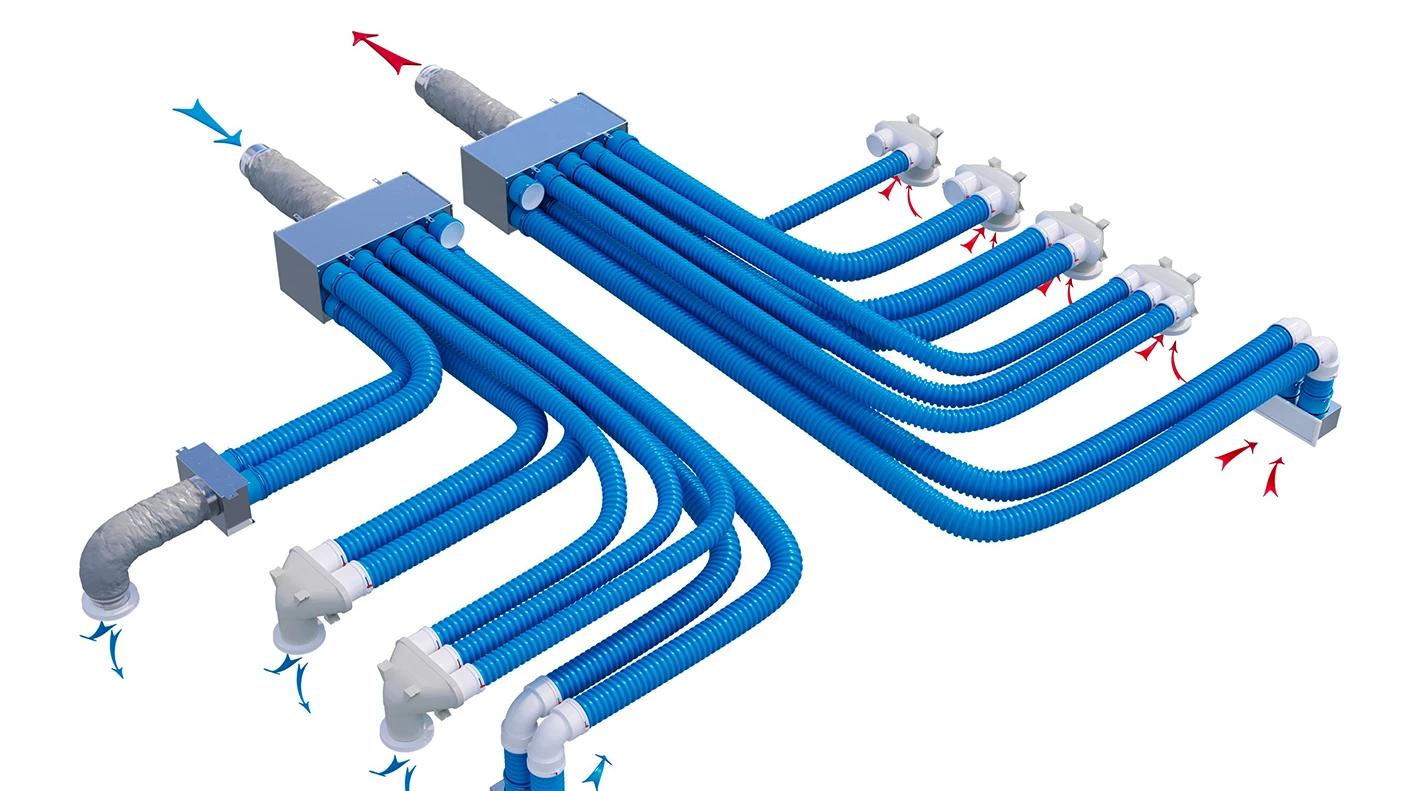
- [Ductwork](/kategorijos/ortakiu-sistemos) Routing - technicians route flexible plastic or rigid galvanized steel ducts from the main unit to all rooms in the house.
- [Silencer](/kategorijos/ortakiu-sistemos/triuksmo-slopintuvai) Connection - special sound attenuators are installed on the duct lines right next to the HRV. They completely absorb motor and airflow vibrations, guaranteeing maximum silence.
- System Balancing - during commissioning, a professional technician uses special instruments to adjust airflows in each room so the system operates evenly.
Daily and Annual Maintenance
Maintaining a rotary system is minimal and completely uncomplicated for the homeowner. The most important and frequent task is to regularly change the HRV filters every 6-12 months to preserve pure air and protect the motors. It is also recommended to pull out the rotary wheel itself once a year and gently vacuum the accumulated dust. This simple and quick routine will ensure your investment operates reliably and efficiently for decades.


