Plate, Rotary, or Enthalpy Recuperator: Which One to Choose?
Comparing plate, rotary, and enthalpy recuperators? Learn which type best fits Lithuanian winters, A++ homes, and your long-term budget.
ORO Haus team
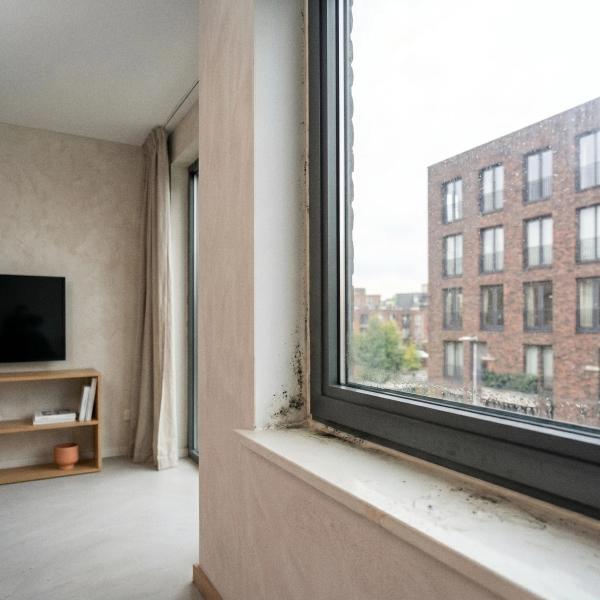
Most people shopping for a heat recovery unit compare brand, airflow, or price first. In Lithuania, however, the more important question is often hidden inside the casing: what kind of heat exchanger core does the unit use? That single choice determines whether January feels comfortable and healthy indoors or whether you wake up with a dry throat, static electricity, and overly dry air.
A plate, rotary, and enthalpy recuperator may look similar in a catalog, but they behave very differently in winter. In A++ homes, where airtightness typically targets around n50 ≤ 0.6 h−1, the ventilation system is not a side feature but the core indoor-climate technology of the building. If you are still deciding between decentralized and centralized solutions rather than exchanger types alone, start with Mold and Foggy Windows: Centralized or Decentralized?.
Quick Answer
- Plate offers very high lab sensible efficiency and complete airstream separation, but it returns no moisture and often needs drainage plus an electrical pre-heater.
- Rotary returns part of the indoor moisture, handles severe cold well, and is especially strong for larger homes and higher airflow projects.
- Enthalpy combines plate-style hygiene with moisture recovery, making it the most rational default choice for most Lithuanian homes.
- For Lithuania, the important comparison is not just the brochure number, but how the unit behaves at -10°C or -20°C and what humidity it preserves indoors.
Core Comparison: Plate vs Rotary vs Enthalpy
| Feature | Plate | Rotary | Enthalpy |
|---|---|---|---|
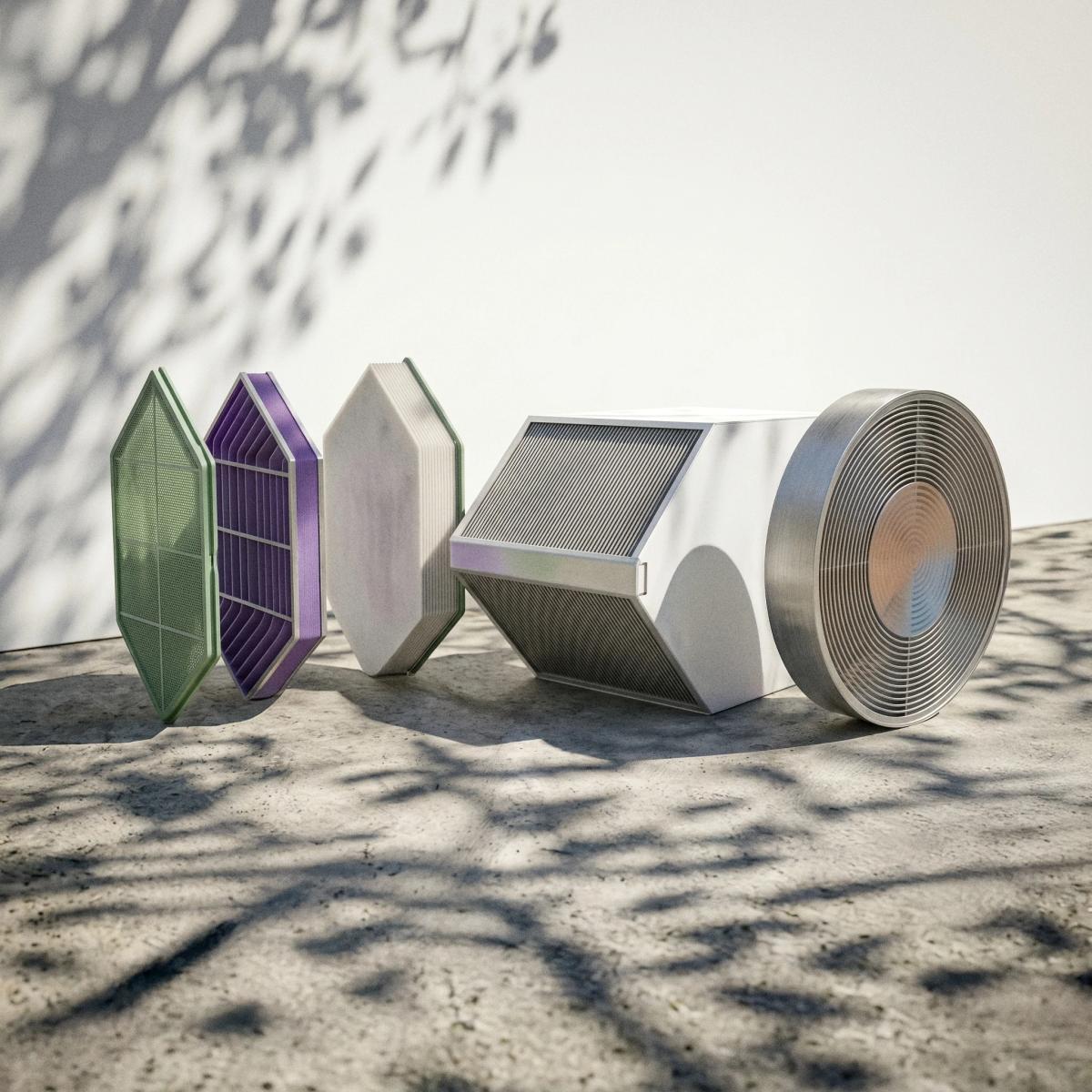
| Operating principle | Two airstreams move through separate channels along thin plates and never physically touch. | A rotating aluminum wheel stores heat from exhaust air and releases it into supply air. | A semi-permeable membrane transfers both heat and part of the water vapor load. |
| Typical sensible efficiency | About 90–95% in lab conditions | About 80–89% | About 85–92% |
| Moisture recovery | 0% | About 40–60% | About 50–85% |
| Odor / carryover risk | Essentially zero | Low, around 1–3%, controlled by purge sector | Very low; membrane passes vapor but blocks particles |
| Frost behavior | High risk around roughly -5°C to -10°C | Usually stable down to around -20°C | Usually more frost-resistant than a standard plate core |
| Need for electric pre-heater | Often yes | Rarely | Rarely |
| Condensate drain | Almost always required | Usually not required | Usually not required, or only as extra insurance |
| Moving parts in the exchanger core | None | Wheel and drive assembly | None |
| Winter comfort | Often dry indoor air and a higher chance of needing humidification | Good humidity balance without a separate humidifier | Good humidity balance without a separate humidifier |
| Best fit | Projects where total airstream separation matters more than moisture recovery and drainage is easy to install | Larger homes, higher-airflow applications, and cases where strong winter stability matters at a good price-to-performance ratio | Most 80–200 m² Lithuanian homes and major renovation projects |
If you want to compare more than brochure percentages, evaluate three things together: moisture recovery, frost behavior, and the extra winter electricity required to keep the unit working properly.
Why Lithuanian Climate Changes the Answer
Lithuania has a long heating season, with January averages around -5°C in Vilnius and periodic cold waves dropping to -25°C or lower. In those conditions, the difference between exchanger types becomes practical very quickly: a standard plate core may already be fighting frost risk while a rotary or enthalpy unit continues operating close to normal.
Then there is the A++ reality. A highly airtight building does not get much accidental fresh air through cracks, so the ventilation system becomes fully responsible for fresh air, humidity, and CO2 control. In practice, designers pursuing A++ target the familiar ~0.9 efficiency benchmark in the energy model, but real winter behavior matters just as much as the brochure figure. If a unit spends a significant share of January in defrost or bypass mode, the paper efficiency number stops meaning much.
| Outdoor temperature | Indoor RH without moisture recovery | Indoor RH with enthalpy or rotary | Practical effect |
|---|---|---|---|
| 0°C | 25–30% | 40–45% | Still manageable, but the comfort difference is noticeable |
| -10°C | 15–20% | 35–40% | Dryness becomes aggressive with standard plate units |
| -20°C | 5–10% | 30–35% | Dry throat, eyes, and higher risk to wood finishes if there is no moisture return |
Dry indoor air is not only a comfort issue. It dries the mucous membranes, increases respiratory sensitivity, disturbs the moisture balance of wood floors and furniture, and often pushes homeowners to buy separate humidifiers that could have been avoided with the right exchanger choice.
Plate Recuperator: Strongest in the Lab, Weakest in Real Winter
Plate heat recovery units became popular for a good reason: they are simple, hygienic, and excellent at separating supply and exhaust air. Because the two airstreams never physically touch, odor and particle transfer is essentially zero. In high-end counterflow designs, the sensible heat efficiency can look extremely impressive on paper.
The Lithuanian problem starts exactly where real winter starts. A plate exchanger returns no moisture at all. Warm indoor exhaust condenses inside the core, that water must be drained away, and around roughly -5°C to -10°C the risk of icing becomes serious. At that point the unit needs bypass operation or an electric pre-heater. If that pre-heater draws 0.5–1.5 kW and runs for hundreds of hours each season, the extra electricity alone can add roughly 100 to 125 EUR per year or more.
- Strength: Maximum airstream separation and very high sensible-efficiency numbers.
- Weakness: Zero moisture recovery, almost always a condensate drain, and often electrical frost protection in Lithuanian winters.
- Real-world outcome: The lower purchase price often disappears once you add drainage, frost protection, and separate humidification.
Rotary Recuperator: Strong for Higher Airflow and Good Value
Rotary heat recovery units work differently: a rotating wheel passes through exhaust and supply zones in sequence, transferring not only heat but also part of the moisture load. That makes them far more comfortable in hard winter conditions and usually removes the need for a dedicated condensate drain or a powerful pre-heater.
Their advantage becomes even clearer in larger houses and higher airflow classes. RECOM 4 SR/SRS EC reaches up to 440 m³/h, while RECOM 6 SR/SRS EC reaches up to 670 m³/h, which makes rotary models highly logical for 150+ m² homes or layouts with large open living spaces. Yes, rotary systems do have a small 1–3% carryover potential, but in modern residential units the purge sector reduces this to a practically irrelevant level in everyday living.
- Strength: Good moisture recovery, strong frost resistance, and compact sizing for high-airflow projects.
- Weakness: The exchanger itself includes a moving wheel, so the mechanical complexity is higher than in a plate or enthalpy core.
- Choose it when: The home is larger, airflow demand is higher, or you want a strong balance of price, moisture recovery, and winter stability.
Enthalpy Recuperator: The Most Rational Default for Lithuania
Enthalpy heat recovery units are best understood as the evolution of the plate concept. Instead of ordinary plates, they use a membrane that lets heat and part of the water vapor migrate through while blocking solid particles and most odor transfer. For Lithuania, that matters enormously: you get almost plate-like hygiene, but without the classic winter complaints of painfully dry air.
That is why enthalpy cores are increasingly the most rational answer for mainstream projects. RECOM 4 SE EPP EC offers up to 410 m³/h, up to 93% heat recovery, and about 26 dB(A) noise, while RECOM 6 SE EPP EC reaches up to 720 m³/h for larger homes. The key advantage is not just the headline number but the whole operating profile: usually no complex condensate drain, no moving parts in the exchanger itself, and far better humidity balance in winter. In summer, the membrane can also reduce part of the outdoor moisture load before it enters the living space.
If you do not have a highly specific need for absolute hermetic air separation or exceptionally large airflow, an enthalpy recuperator is usually the best balance of comfort, running cost, and simplicity for Lithuanian homes.
The Real 15-Year Cost
The most common mistake is comparing only the sticker price of the unit. Real ownership cost includes the recuperator itself, winter support hardware, installation complexity, and whether you later need to buy a separate humidifier. This is exactly where plate systems often lose despite looking cheaper at first glance.
One important nuance: technology alone does not decide whether rotary or enthalpy will be more expensive. In real assortments, the ranges often overlap, and a higher-end enthalpy unit can easily cost more than an entry or mid-tier rotary model.
| Cost line | Plate | Enthalpy | Rotary |
|---|---|---|---|
| Typical unit price | 1200–2000 € | 1500–2300 € | 1750–2250 € |
| Extra installation | 300–500 € for drainage and frost protection | 0–100 € | 0–100 € |
| Extra winter electricity | About 100–125 € / year or more | Usually minimal | Usually minimal |
| Separate humidifier | Commonly needed | Usually unnecessary | Usually unnecessary |
| Approx. 15-year TCO | 5000–6500 € | 3500–5000 € | 3800–5500 € |
Common Myths
- Myth: plate is always the most efficient. That is only true if you compare sensible heat in lab conditions. Once moisture, frost protection, and pre-heater energy are included, the real winter result is often weaker.
- Myth: rotary units will make the house smell like the bathroom. A properly engineered purge sector keeps carryover very low, to the point where it is practically irrelevant in residential use.
- Myth: enthalpy membranes wear out quickly. Modern membranes are a mature technology and last many years when filters are replaced on time.
- Mistake: saving 800 € on the unit and then paying for a humidifier, pre-heater electricity, and more complicated installation. That is usually false economy.
What Should You Choose by Situation?
| Situation | Recommended type | Why |
|---|---|---|
| 80–180 m² new build or major renovation | Enthalpy | Best balance of comfort, humidity control, and operating simplicity. |
| 150+ m² house or higher airflow demand | Rotary | Strong fit for large airflow demand, solid price-to-performance, and very stable winter operation. |
| Project where absolute air separation matters more than moisture recovery | Plate | Works only if drainage and extra frost protection are not a problem. |
| Budget is limited, but you still want to avoid winter dryness | Enthalpy | Often cheaper over the full lifecycle than a seemingly cheaper plate solution. |
| Wood floors, instruments, strong sensitivity to dry air | Enthalpy or rotary | Moisture recovery becomes a necessity rather than a luxury. |
If you want the safest default answer for Lithuania, start with enthalpy heat recovery units. If you are building a larger house or want strong price-to-performance at higher airflow, look closely at rotary heat recovery units. Before you lock in the final choice, also read How to Choose a Heat Recovery Ventilator: 7 Definitive Criteria and Flexible vs. Steel Ducts: The Definitive Guide for A++ Homes.