Mold and Foggy Windows: Centralized or Decentralized?
Mold and condensation after renovation are serious risks. Learn how decentralized or centralized ventilation protects your home and health.
ORO Haus team
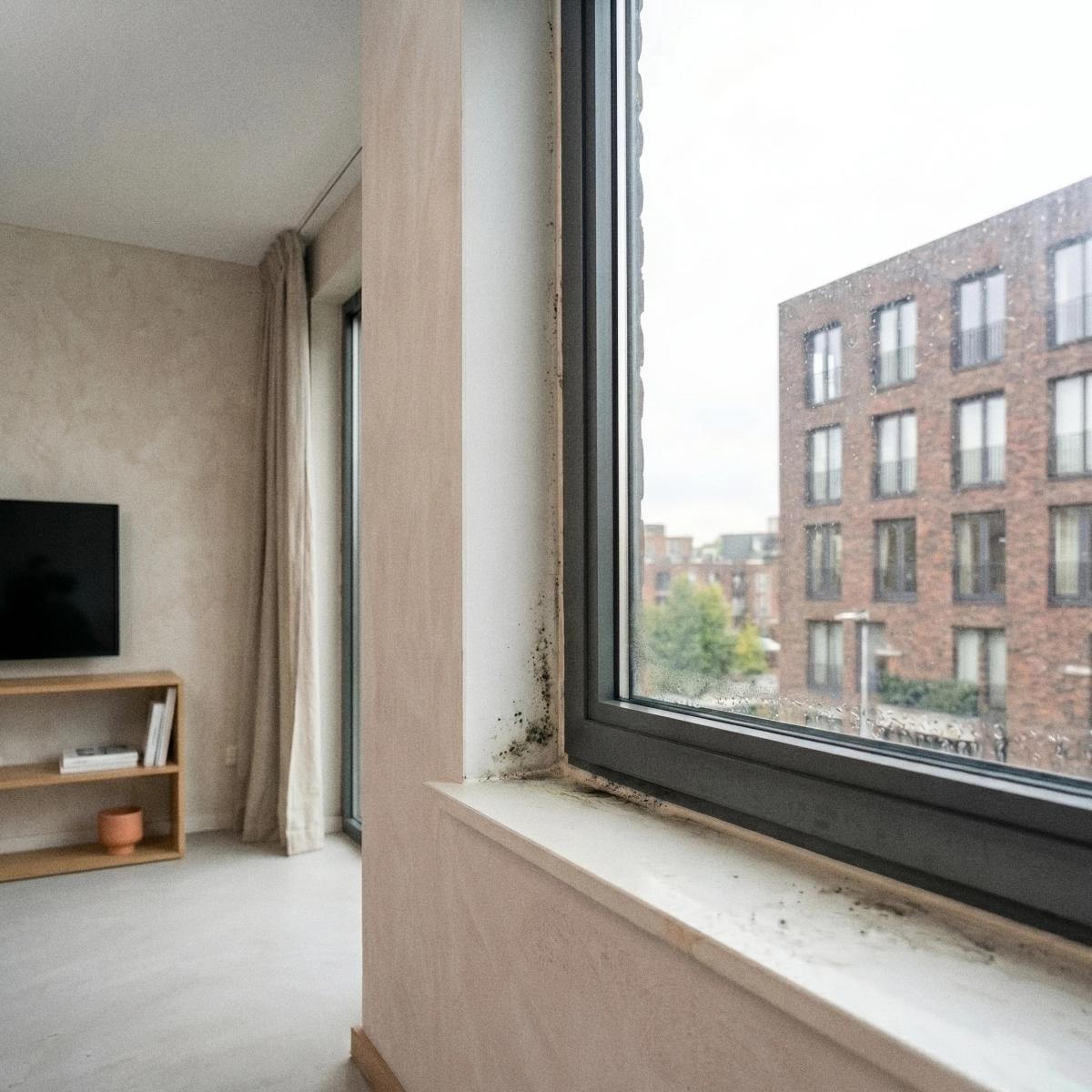
Many residents in modernized apartment blocks face an unexpected paradox: after insulating walls and replacing windows, the home gets warmer, but the windows start to fog up, condensation appears, and mold grows in the corners. This is not a window defect. It is a building-physics consequence of a sealed envelope that only continuous, controlled mechanical ventilation can solve.
Key Insights on Moisture and Ventilation
- Airtightness without ventilation is a mistake: New windows stop natural infiltration, trapping moisture inside.
- Dew point physics: When relative humidity exceeds 60%, condensation inevitably forms on cooler surfaces such as glass edges, frames, and corners.
- Decentralized ventilation is usually the best fit for finished apartments or homes where adding ducts would be too destructive.
- Centralized ventilation is the best choice for new builds, major renovations, and larger dwellings where full air control matters.
Why Does Mold Appear After Renovation?
Older buildings were effectively designed around uncontrolled air leakage through window frames and small gaps in the envelope. Once windows are replaced and facades are insulated, that uncontrolled air exchange largely disappears. Meanwhile, a family of four still releases around 10 to 12 liters of water vapor per day. At 21°C and 60 to 70% relative humidity, the dew point is reached on colder glass edges, frames, and external-wall corners, so condensation quickly turns into a stable mold habitat.
| Relative Humidity (RH) | Dew Point | Condensation Risk |
|---|---|---|
| 40% | 6.9°C | Very Low |
| 50% | 10.2°C | Low (possible at cold edges) |
| 60% | 12.9°C | High (glass edges) |
| 70% | 15.3°C | Critical (mold on corners) |
Simply opening windows in winter is inefficient: you lose expensive heat, and humidity rises back within an hour. It doesn't prevent mold during the night.
What Does Not Work as a Long-Term Fix?
- Opening windows alone lowers humidity only briefly, wastes heat, and depends entirely on human discipline.
- A dehumidifier can reduce RH, but it does not solve CO2, odors, or VOC buildup.
- A bathroom fan alone can create negative pressure in an airtight apartment while doing nothing to supply fresh air to bedrooms or living rooms.
- Passive trickle vents depend on weather and pressure differences, and they provide no heat recovery.
Decentralized Ventilation: When the Finishes Are Already Done
If your apartment is already finished and you cannot install ducts, decentralized ventilation is usually the most practical solution. These units are installed directly through an external wall and help reduce moisture in specific rooms without a full interior rebuild.
How These Units Work in Practice
Some wall units operate in alternating cycles: they exhaust warm, humid indoor air for a short period, store heat in the exchanger, and then supply pre-warmed outdoor air back into the room. Other units supply and extract continuously through a small heat exchanger. In both cases, the goal is the same: remove moisture and CO2 without throwing away all the heat as you would with open-window airing.
- Simple Installation: Only a hole in the wall and a power connection are required.
- Room-by-room control: In practice, you usually need a unit in each main room rather than one device hidden in a corridor.
- Heat preservation: Good units recover a large share of the heat, so fresh air does not automatically mean high heating losses.
- Limits: This is a strong option for bedrooms and living rooms, but kitchens and bathrooms still need a proper extract strategy.
In apartment blocks, drilling through the facade may require approval from the building administrator or HOA. It is worth checking that before buying equipment.
Centralized Ventilation: Maximum Control and Comfort
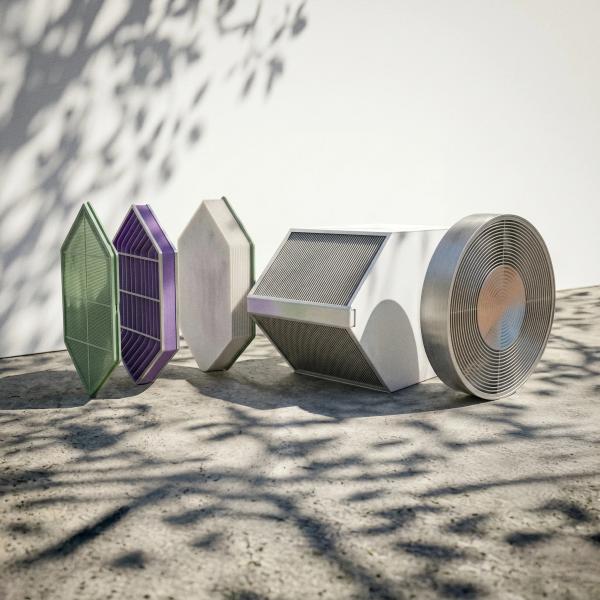
This is a system where one powerful heat recovery unit supplies fresh air to bedrooms and living rooms through ductwork while extracting stale air from the kitchen, bathroom, and WC. That creates directed airflow across the whole house or apartment and solves moisture, CO2, and odor control at the same time.
- Total control: Fresh air is supplied to dry rooms while moisture and odors are continuously removed from wet rooms.
- Filtration: Centralized systems can use larger F7 or ePM1 filters, which are better at trapping fine particles and pollen.
- Acoustics: The main unit is usually placed in a utility area, so living spaces are left with only quiet ceiling or wall diffusers.
- Scale: Once you need to ventilate 4 to 6 rooms or a whole house, centralized ventilation often becomes the more rational comfort and maintenance choice.
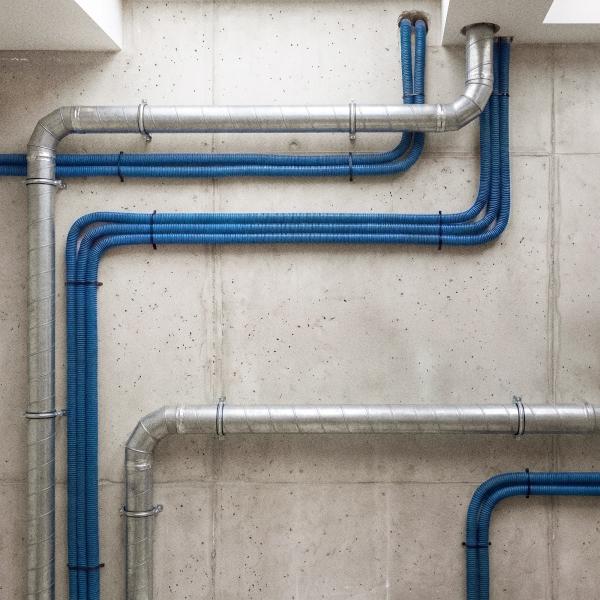
If you are planning a major renovation or a new build, it is worth specifying a flexible duct system with 75 mm or 90 mm ducts early in the project. These systems often fit into roughly a 10 cm ceiling void, allow radial runs to each room, and significantly reduce cross-talk noise between spaces.
Which Solution Fits Which Situation?
| Situation | Recommendation | Why |
|---|---|---|
| 60 m² apartment after renovation with mold in bedrooms | Decentralized ventilation (2 to 3 rooms) | Fast moisture control with the least demolition. |
| 60 m² apartment before major renovation | Centralized if ceiling voids are planned; otherwise decentralized | Ductwork makes sense only if ceilings or walls are already being opened. |
| 120 m² new build or deep renovation | Centralized ventilation | Best filtration, acoustics, and even air distribution across the whole dwelling. |
| Large existing dwelling with no renovation planned | Decentralized by zones or in stages | Avoids major disruption, although the number of units grows with room count. |
| One severely affected room | Targeted decentralized solution | The fastest way to stop condensation in a specific zone. |
In a small apartment, decentralized ventilation usually has the lower upfront cost. In larger homes, centralized ventilation often becomes more rational over time because one unit and one filter set serve the whole dwelling.