How to Choose a Heat Recovery Ventilator: 7 Definitive Criteria
Building an A++ home? Discover the 7 engineering criteria to select a whisper-quiet, highly efficient MVHR system that perfectly balances your microclimate.
ORO Haus team
Forget about wiping frosty windows in the morning, waking up in a stuffy bedroom, or constantly wondering when to crack a window open. In modern, hyper-airtight A++ class building envelopes, natural ventilation through structural infiltration is physically impossible. Today, mechanical ventilation with heat recovery (MVHR) is the respiratory system of your home. But how do you select a system that is efficient, legally compliant, and acoustically invisible? This engineering guide will walk you through the process.
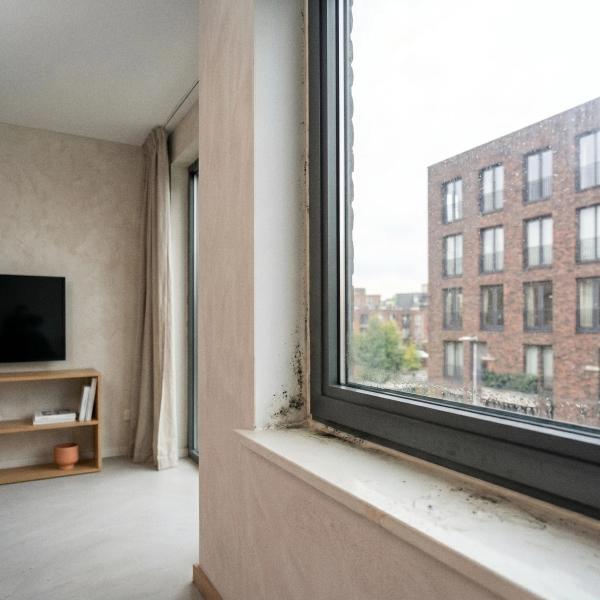
(Dealing with mold in an older apartment where running ducts is impossible? Read our guide: Mold and Window Condensation: Is a Mini-Recuperator Worth It?)
- Capacity: Oversize the unit. It should meet your nominal airflow needs while running at only 50 – 60% of its maximum capacity.
- Core Type: Enthalpy heat exchangers are the ultimate Baltic standard for preventing dry winter air.
- Acoustics: Bedroom background noise must strictly remain under 25 dB(A).
- Ducting: Invest in a semi-rigid radial manifold system; avoid cheap corrugated flexible foil at all costs.
1. Airflow Dynamics: The Science of Oversizing
Selecting an MVHR unit based purely on arbitrary square footage tiers is a critical mistake. Your home requires a meticulously calculated, continuous exchange of air.
- Measure the ventilated area: Calculate the total floor area (m2) of all habitable rooms, excluding unconditioned spaces like garages.
- Calculate the volumetric exchange: Multiply the floor area by your standard ceiling height: V = A × 2.5 (where V is required airflow in m3/h, A is area in m2, and 2.5 is the ceiling height in meters).
- Factor in human occupancy: Building science dictates a minimum requirement of 30 to 40 m3/h of fresh air per adult occupant to adequately dilute exhaled CO2 and moisture.
Never exact-match capacity. If your home requires a continuous flow of 300 m³/h, do not buy a unit rated for a maximum of 300 m³/h. Running an electrically commutated (EC) fan near its upper limit generates massive aerodynamic turbulence and exponential electrical consumption. Aim for 50–60% operational capacity.
| Habitable Area (m²) | Nominal Required Airflow (m³/h) | Recommended Unit Max Capacity (m³/h) | Optimal Threshold |
|---|---|---|---|
| 40 – 60 | 120 – 180 | 250 – 300 | 45% – 55% |
| 80 – 120 | 220 – 320 | 400 – 500 | 45% – 60% |
| 130 – 160 | 330 – 400 | 500 – 600 | 50% – 60% |
| 170 – 220+ | 420 – 550+ | 600 – 900+ | 50% – 60% |
2. Thermodynamic Cores: Protecting Your Microclimate
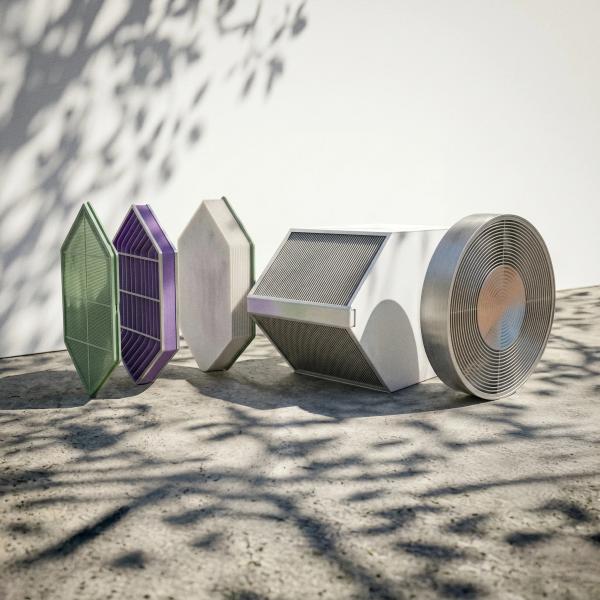
Standard cross-flow plate heat exchangers boast high sensible thermal efficiencies, but their physics dictate hermetically isolated airstreams. As frigid winter air is heated, its relative humidity plummets, leading to cracked skin and electrostatic shocks. They also require energy-intensive electrical pre-heaters to prevent condensate from freezing and rupturing the core.
The Warm Expert Tip: For deep sub-zero winters, the enthalpy plate heat exchanger is the zero-compromise standard. Utilizing a vapor-permeable membrane, it transfers both thermal energy and water molecules (latent heat), completely mitigating winter desiccation without any moving parts.
While rotary systems also return moisture, their moving wheels can allow up to 5% cross-contamination of exhaust odors back into the fresh air supply.
👉 Detailed comparison: Plate, Rotary, or Enthalpy: Which to Choose?
3. Acoustic Engineering: Psychoacoustic Comfort Thresholds
A pervasive reason occupants manually power down their systems is intrusive noise. Ventilation must be imperceptible.
Understanding Noise Sources: MVHR noise originates from two places. Breakout noise radiates through the unit's chassis (mitigated by placing the unit in a plant room or buying a Premium EPP-housed unit). In-duct noise is aerodynamic shear traveling through the pipes (mitigated by massive in-line silencers and keeping air velocity below 3 m/s).
| Acoustic Zone | Max Permissible Noise Level | Primary Mitigation Strategy |
|---|---|---|
| Bedrooms | ≤ 25 dB(A) | Velocity < 3 m/s, primary silencers |
| Living Rooms | ≤ 30 dB(A) | Proper unit sizing (< 60% capacity) |
| Kitchens & Baths | ≤ 45 dB(A) (Boost Mode) | Extract valves with acoustic absorption |
4. Advanced Filtration: The OpEx of Pristine Air
Transition away from outdated G4/F7 coarse filters. Modern urban living requires ISO 16890 ePM1 standard filtration to intercept microscopic particulate matter (PM1, PM2.5) and winter biomass smoke.
Because dense filtration media create substantial static pressure resistance, premium MVHR units utilize deep-pleated designs with a larger surface area to lower pressure loss and save electricity. Financially, expect an operational expenditure (OpEx) of 60 to 180 EUR annually for high-quality replacement sets.
5. The Truth About A++ Certification Mandates
In Lithuania, MVHR is a strict legal requirement under STR 2.01.02:2016 for new builds. To pass A++ certification algorithms, the building envelope must achieve an exceptional airtightness (n50) of 0.60 h−1 at 50 Pascals. However, there is a common myth regarding the unit's efficiency.
While you might hear that a strict 90% (0.9) efficiency coefficient is legally required for the unit itself, A++ actually evaluates the holistic primary energy consumption of the entire building.
Experts recommend units with an efficiency of 80% to 90%. While standard plate units can boast 90%+ sensible efficiency, premium enthalpy units might show 80% to 85% on paper because they are busy recovering latent heat (moisture). They are perfectly compliant with A++ builds because this fractional difference is easily balanced out by your home's overall insulation, airtightness, or solar panels.
👉 For architects & engineers: A++ Requirements: Ensuring a 0.9 Efficiency Coefficient
6. Distribution Topologies: Defending System Integrity
Do not cripple a world-class 5,000 EUR unit by attaching it to a substandard ducting network.
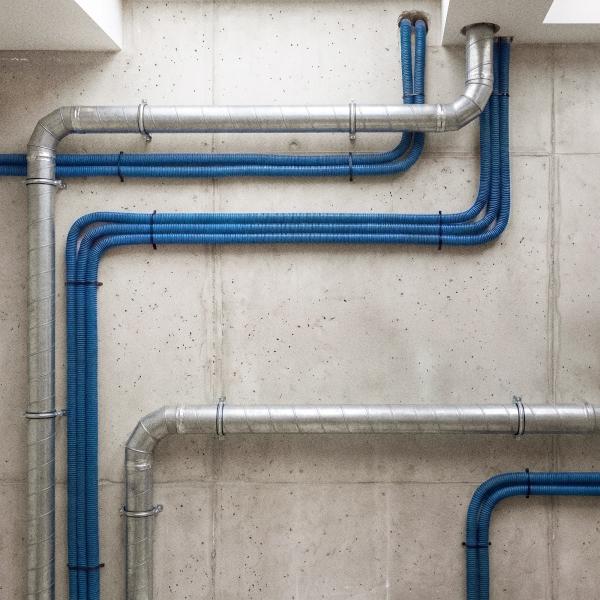
Aggressively avoid cheap, flexible corrugated foil ducting. Its undulating interior drastically increases aerodynamic friction (total system counter-pressure should ideally stay below 150 Pa), creating resonant noise and establishing stagnant micro-environments where microbial life will thrive over the decades.
The contemporary standard is the semi-rigid radial (manifold) distribution system. Unbroken lengths of 75mm or 90mm crush-resistant, anti-bacterial plastic tubing run directly from a central acoustic plenum to each room, eradicating hidden air leaks and preventing acoustic cross-talk between bedrooms.
👉 Can't run ducts? Decentralized vs Centralized Ventilation: When to Choose Which?
7. Financial Modeling: Budgeting for Total Cost of Ownership
Evaluate the holistic Total Cost of Ownership (TCO). The core unit is just the beginning; allocate an additional 1,500 to 3,500 EUR for the semi-rigid ducting, attenuators, plenums, and professional labor.
| Classification | Typical Investment (Unit Only) | Realistic Efficiency | Typical Brands | Best Application |
|---|---|---|---|---|
| Value Tier | 900 € – 1,800 € | 70% – 80% | Blauberg, Vents | Budget builds, retrofits, standard compliance. |
| Comfort Tier | 1,800 € – 3,000 € | 80% – 88% | Komfovent Domekt | Most modern A+/A++ residential projects. |
| Premium Tier | 3,500 € – 5,500+ € | 85% – 90%+ | Zehnder ComfoAir Q | Passivhaus projects, luxury bespoke builds. |
System Commissioning: The Final Necessity. A system cannot simply be plugged in. Post-installation, a certified technician must use a calibrated anemometer hood to physically adjust every valve. If the total supply volume doesn't perfectly match the extract volume, you risk pressurizing moisture into your building's structural fabric.
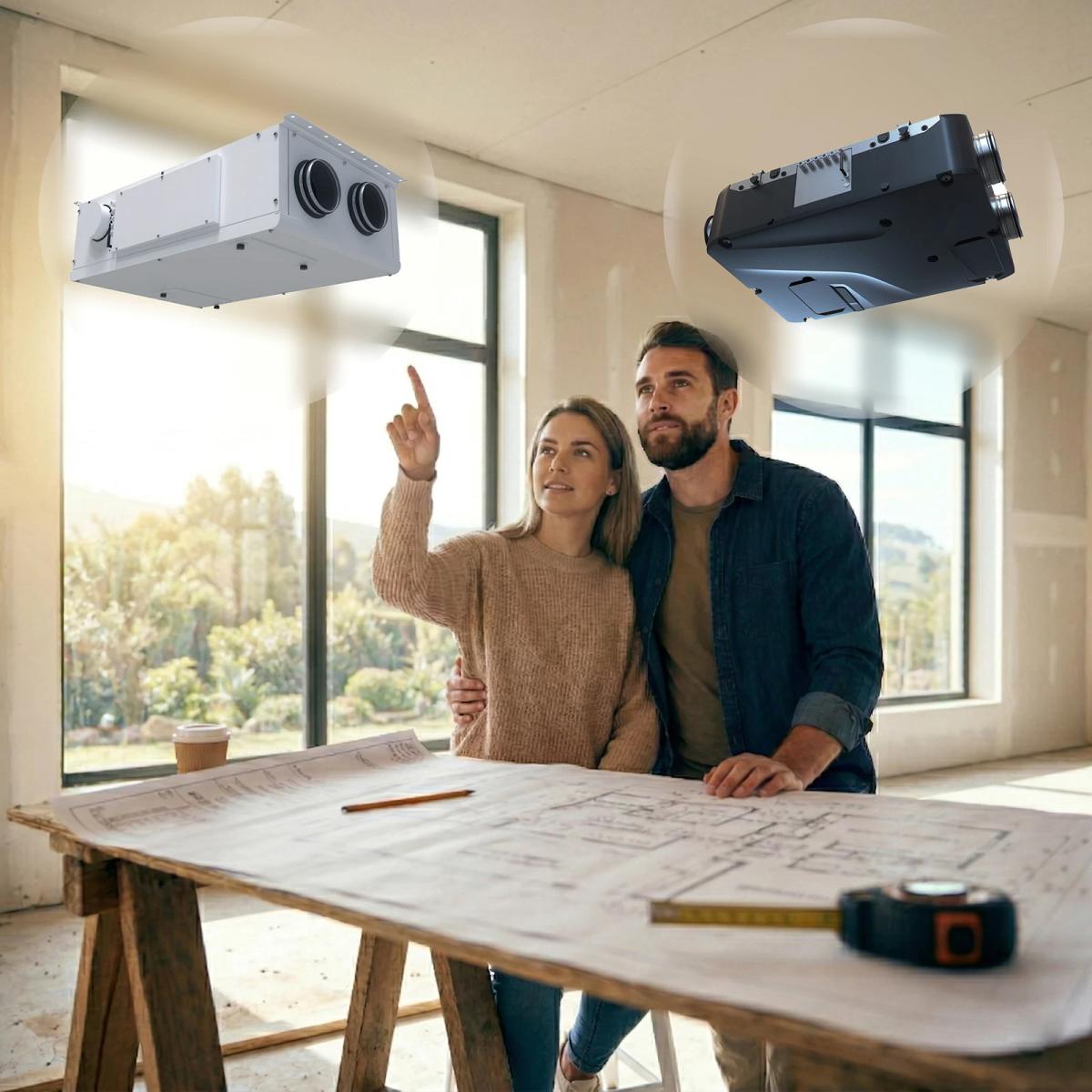
Need help with the math? Send your house plans to us. We will calculate your required capacity and help you choose the right model for free. Once you decide to proceed with a system, we can also assist with the detailed ductwork layout in the next stages of your project.