

Air Flow Regulators and Dampers
A balanced ventilation system runs quietly and precisely – forget whistling ducts or temperature differences between rooms. From motorized shut-off dampers to precise IRIS regulators, find everything for airflow control here.
Protect your home from back-drafts and unpleasant odors with reliable back-draft shutters.
Airflow Control Damper€14.40-€15.60
Why airflow regulation determines home comfort
The problem: whistling ducts and temperature chaos
Have you ever experienced a draft in one room while another feels airless? This is a classic sign of an unbalanced ventilation system. Without proper regulators, air flows where it is easiest – taking the shortest path and leaving the furthest rooms without fresh supply.
Another common annoyance is noise. When a system tries to "force" a large volume of air through poorly adjusted diffusers, an unpleasant whistling sound occurs. Additionally, unsealed ducts can let cold air and outdoor noise into your home when the system is off.
The transformation: silence and balance in every corner
Properly installed dampers create harmony. With IRIS regulators, every branch gets exactly the amount of air specified in the design. The bedroom air is fresh but you feel no movement, while the living room has enough oxygen even when guests gather.
Safety and energy savings become standard. Motorized dampers tightly seal outdoor channels when the unit stops, so heat does not escape outside in winter. Back-draft shutters ensure that neighbors' cooking smells from a shared ventilation shaft never reach your kitchen.
Save up to 15% on energy simply by balancing the system – do not heat excess airflow in rooms that do not need it, and avoid heat loss through leaky openings.
How to choose the right regulator or damper?
Different dampers serve different functions. Although they are all installed inside the duct, some are for precise measurement, others for shut-off. The choice depends on your goal:
- IRIS regulators (for balancing) – the most precise tool on the market. They feature measurement nipples where a manometer can be connected to see the exact airflow. Their diaphragm mechanism operates quietly, making them the best choice for residential spaces.
- Shut-off dampers – used to completely block airflow. Can be manual or with a platform for an electric actuator. Essential for frost protection at outdoor intake grilles.
- Back-draft shutters – "butterfly" type dampers that open only with airflow; when the fan stops, a spring closes them. Essential for bathroom fans and range hoods.
- Throttle dampers – simple dampers for flow reduction. They are cheaper than IRIS but can generate more noise at high resistance, so they are installed further away from diffusers.
Compatibility with your system
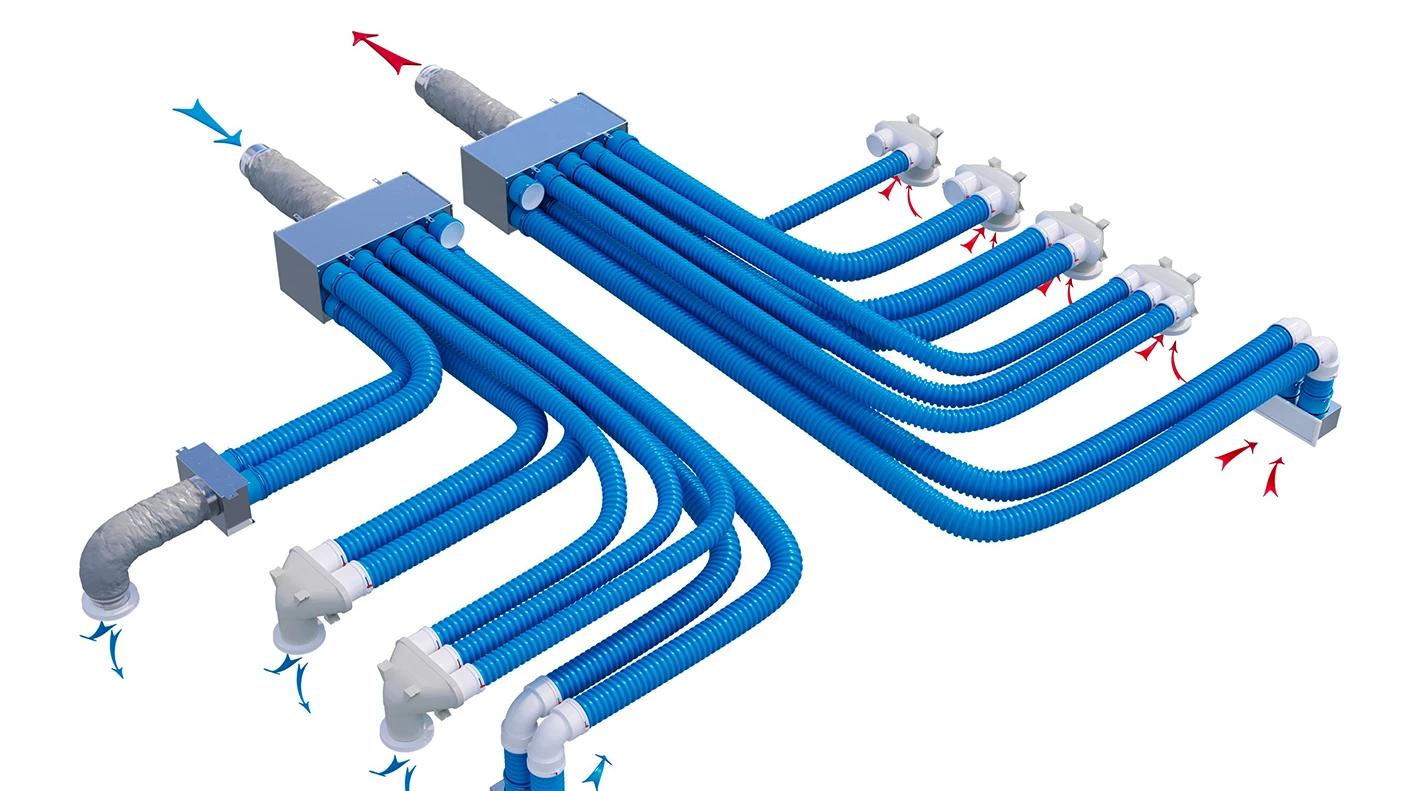
The most important rule – diameter must match the duct. For a 125 mm duct, choose a 125 mm damper. If you are using a flexible duct system, regulating dampers are usually installed at the manifold branches or special throttles are used in diffuser boxes.
Installation and system balancing
Installation requirements for precise operation
The damper's location determines its efficiency and noise level. Even the most expensive IRIS damper will show inaccurate data if installed incorrectly. Turbulence in the duct distorts measurements.
- Straight section rule – you must leave a straight duct section of at least 4x diameter before a regulating damper and at least 1x diameter after it. This allows the airflow to stabilize.
- Accessibility – never permanently seal a regulator behind drywall without an access hatch. System balancing is done at the end, and sometimes re-adjustment is needed after a few years.
- Tightness – connection points must be sealed with aluminum tape or clamps with rubber gaskets to avoid whistling through gaps.
Maintenance and longevity
Airflow regulators require minimal maintenance. The main enemy is dust and grease (in kitchen areas), which can make the damper mechanism stiff. Timely filter replacement protects damper mechanisms from contamination, ensuring your ventilation system remains balanced for decades.

