

Standard Diffusers

Looking for a reliable and easy-to-install ventilation solution? Standard surface-mounted diffusers ensure efficient air distribution without complex ceiling preparation.
It is a classic, time-tested choice that guarantees fresh air and incredibly simple daily maintenance.
Steel air outlet diffuser with mounting ring€7.20-€26.20
Steel air supply diffuser with mounting ring€8.70-€16.60
Why choose standard diffusers for daily comfort?
The challenge of finishing a ventilation system
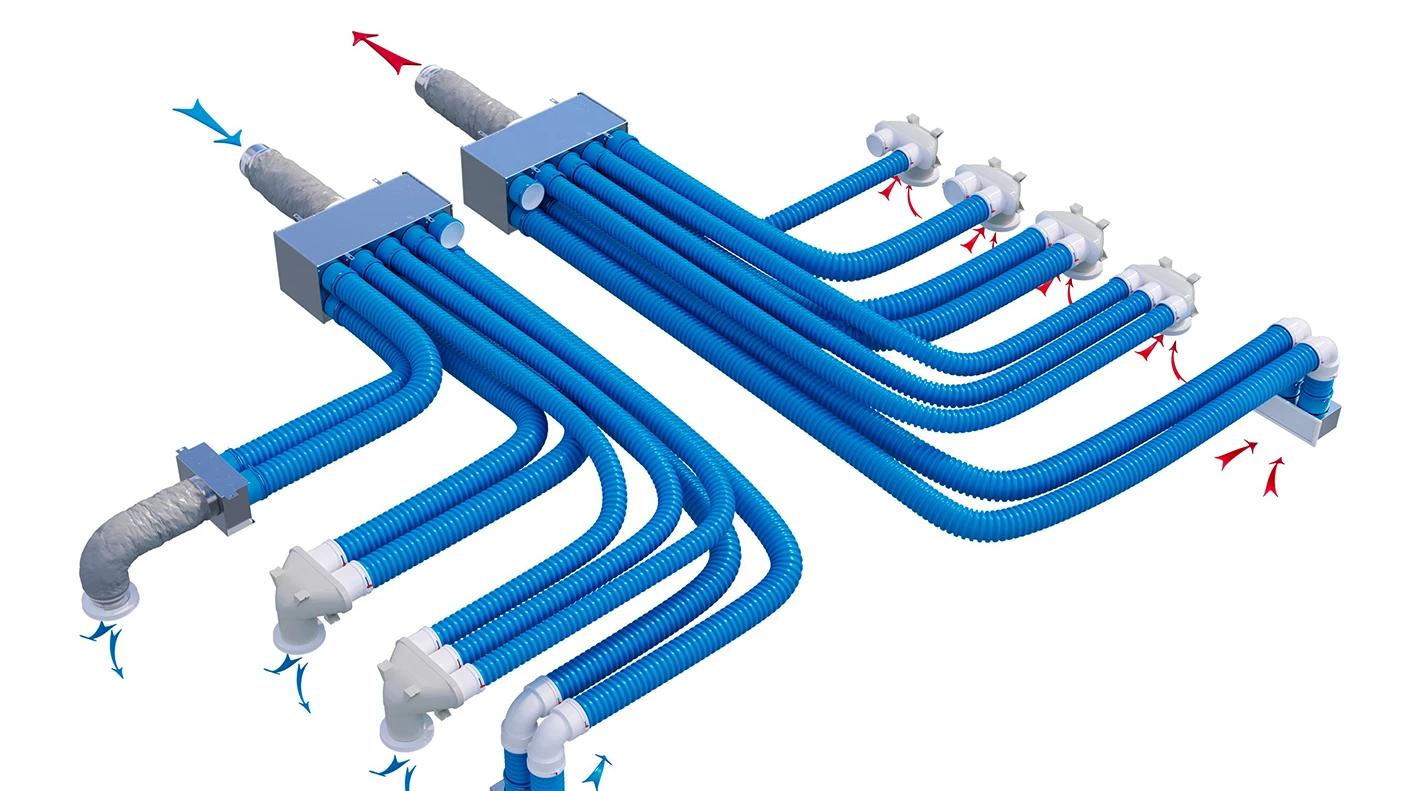
When building or renovating a home, you often face time and budget constraints. There isn't always the possibility or desire to carry out the complex plasterboard forming and plastering work required by hidden ventilation elements. However, leaving open duct holes in the ceiling is also not an option – it is not only aesthetically unappealing but also causes massive air whistling noise.
An improperly finished system means direct drafts in your rooms. Without a proper and balanced air distributor, the blown-in fresh air falls straight down. This creates unpleasant cold zones that make it uncomfortable to sit on the sofa or sleep directly under the vent.
A stress-free classic choice
Standard surface-mounted diffusers solve this problem quickly and effortlessly. They are mounted directly onto already finished, painted ceilings, elegantly hiding the duct openings under a neat finishing frame. You do not need to hire additional finishing tradesmen or worry about complex engineering integrations – the installation itself takes just a few minutes.
These classic elements immediately create a healthy and quiet indoor microclimate. Their aerodynamic plate disperses the supply air horizontally along the ceiling, ensuring the room is ventilated evenly and without any physical discomfort. By simply twisting the central part of the diffuser, you can independently adjust the airflow intensity in each room without any tools.
Quick installation and reliable operation – standard diffusers withstand the test of time, require no ceiling demolition work, and ensure the smooth operation of your heat recovery unit every single day.
How to choose the most suitable standard diffusers?
The range of standard diffusers is particularly wide and adapted to various technical needs. To ensure system longevity and avoid unwanted noise, it is important to carefully evaluate these key parameters:
- Purpose (supply or extract) - choose the model based on the specific duct's function. Supply diffusers spread air widely to prevent drafts, while extract diffusers are designed to efficiently collect moist or dirty air without resistance, pulling it outside.
- Manufacturing material - powder-coated steel diffusers are sturdy, do not fade or yellow from the sun, making them ideal for living rooms. Plastic (ABS) diffusers are resistant to moisture and corrosion, so they will serve perfectly in bathrooms, kitchens, or basements.
- Connection diameter (mm) - the diffuser neck size must exactly match the diameter of your plenum box or duct. The most commonly used diameters in homes are 100 mm or 125 mm. A diffuser that is too small on a large airflow line will inevitably operate noisily.
- Airflow regulation capability - many standard models have a rotatable central plate, allowing you to easily increase or decrease the gap for the passing air. This is extremely convenient for quickly throttling the flow in the bedroom.
System matching and accessories
Although the diffusers themselves have basic regulation, professional [diffuser accessories](/kategorijos/difuzoriai-ir-groteles/difuzoriu-priedai) are recommended for precise system calibration. Special acoustic flow regulators inserted into the plenum boxes help prevent the whistling that sometimes occurs when the diffuser plate itself is tightened strongly. Before buying parts, be sure to check the dimensions of your home's ductwork system spigots.
Installation and easy maintenance of surface-mounted diffusers
An extremely simple installation process
The installation of standard diffusers is the fastest and cleanest of all ventilation elements. These works are done at the very end, when the walls and ceilings are completely painted, cleaned of dust, and ready for living.
- Fixing the mounting ring - a special steel mounting ring (collar) is inserted and screwed into the prepared hole in the ceiling, directly into the plenum box neck. It ensures the stable retention of the diffuser.
- Sealing - special sealing tape is often used between the mounting ring and the ceiling or duct wall. This ensures that air does not leak into the intermediate structures and unwanted noise transmission does not occur.
- Inserting and fixing the diffuser - the diffuser itself is simply pressed firmly or half-twisted (depending on the model's catches) into the prepared ring. Its wide finishing frame beautifully covers any irregularities around the cut gypsum opening.
- Final balancing - using a professional anemometer, the actual airflow is measured. If necessary, the central diffuser plate is turned and locked with a locknut in the desired position.
Daily cleanliness and system longevity
Maintenance of standard models is performed without any special engineering knowledge or tools. When cleaning the house, simply unscrew the central plate of the diffuser or pull the entire diffuser out of the ring and wash it with warm soapy water – this will remove the dust accumulated on the frame in a minute. To ensure that the ventilation ducts and indoor air always remain pure, it is highly important to regularly check and change the central heat recovery unit filters on time. This will guarantee flawless system operation for years to come.


