

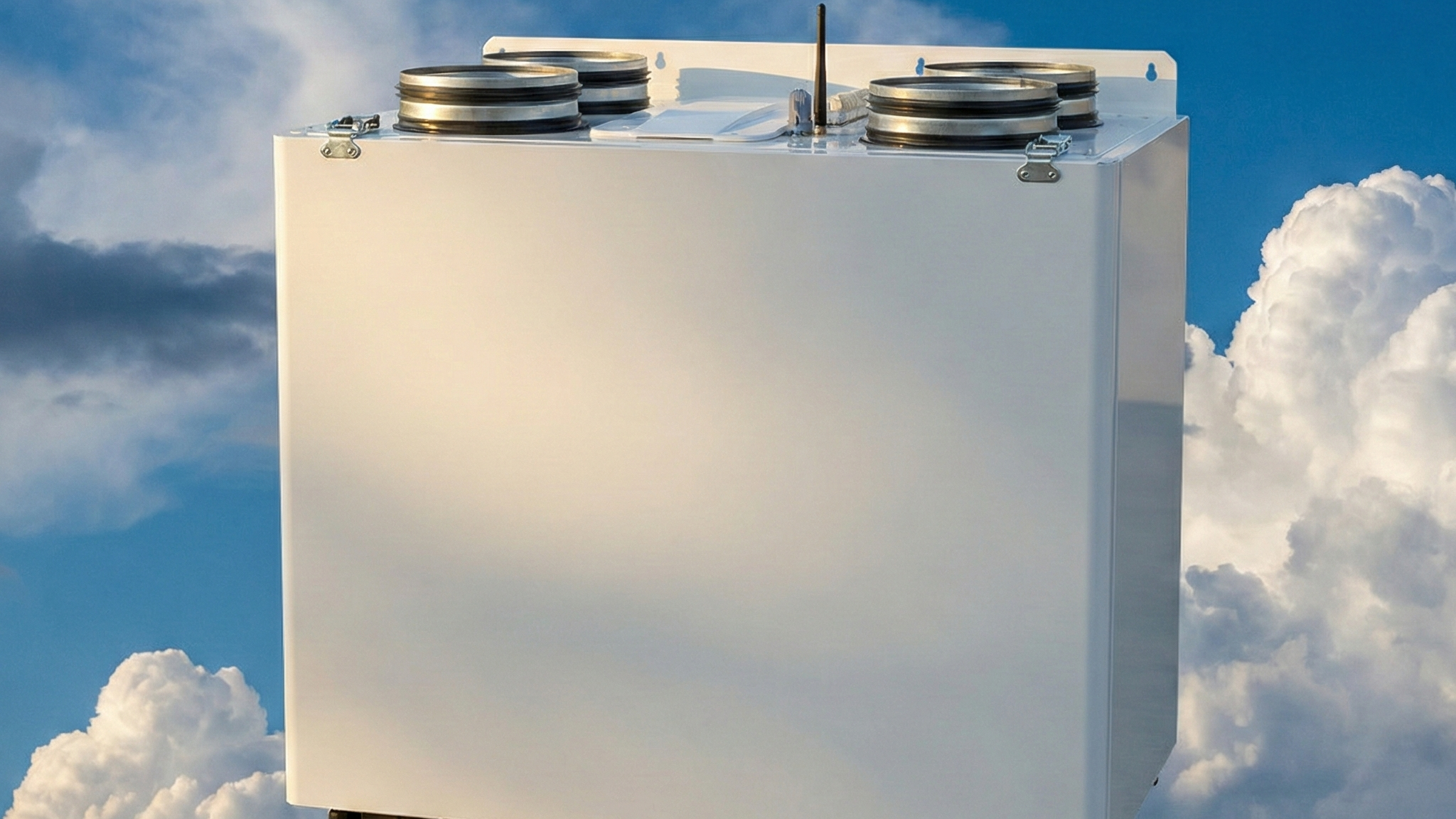
The problem of cramped spaces and vibrations
Installing ventilation systems in modern homes often faces a critical lack of space. Heat recovery units are frequently hidden in small corners of utility rooms, above washing machines, or in narrow closets. When trying to connect the unit to the outdoors in such spaces using completely rigid and unyielding pipes, every millimeter becomes a headache. An inaccurately drilled hole in the wall means a rigid pipe simply will not fit, and forcing components together will cause them to lose airtightness.
Rigid trunk lines are also perfect transmitters of mechanical noise. If rock wool-insulated galvanized steel is used for the outdoor exhaust and intake, motor vibrations often travel through the metal itself straight to the external wall. This can create unwanted structural resonance that you will feel on quiet nights, even through the closed door of the utility room.
The soft, flexible, and silent EPE transformation
EPE (Expanded Polyethylene) ducts provide the installer and the homeowner with unique engineering freedom. Because of their inherent elasticity, these insulated pipes can be slightly bent. This means that if the heat recovery unit spigot and the hole in the external wall are misaligned by a few centimeters, the EPE duct can be gently curved to perfectly connect the system without using any additional angular elbows that reduce airflow.
This material acts as a massive sound dampener, absorbing noise. The EPE foam structure is softer than EPP, so it does not transmit motor vibrations. Air travels extremely quietly, and moisture has no chance of penetrating the closed polyethylene pores. You get an absolutely dry, silent, and adaptably flexible trunk line for your ventilation system.
Exceptional sound absorption and flexibility – EPE ducts absorb up to 30% more mechanical vibrations than completely rigid solutions, while simultaneously forgiving minor space planning errors during installation.