

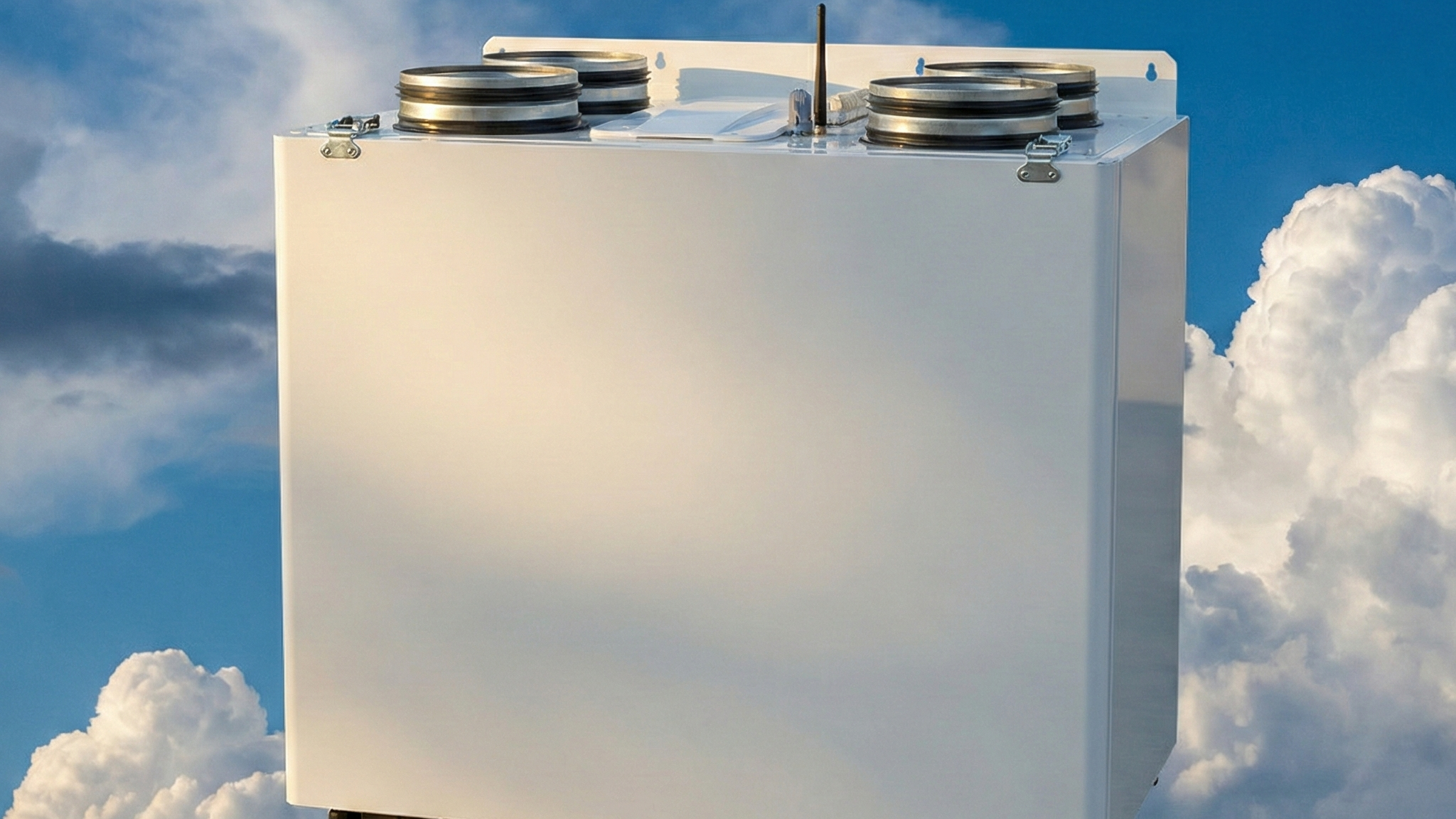
Fatigue and stuffiness – unnoticed consequences of poor air
Imagine a living room party or a typical night in a closed bedroom. While everything seems fine and comfortable at first, after a few hours the air gets heavy, headaches begin, and sleep becomes restless. This is an invisible excess of carbon dioxide (CO2) and humidity, which our senses fail to detect in time. Our bodies react very sensitively to a lack of oxygen, but we do not have a natural 'CO2 sensor', so we notice the problem too late.
By the time you feel the stuffiness yourself and decide to open a window, the indoor microclimate has already severely degraded. Manual ventilation control is inefficient: we usually over-ventilate (losing precious heat) or under-ventilate (harming our health). Without continuous air quality measurement, your engineering systems operate on blind guesswork that does not match the reality of your daily rhythm.
A home that takes a breath right on time
With smart microclimate sensors, your home gains a 'sense of smell' and reacts instantly. As soon as CO2 or volatile organic compounds (VOCs) reach a threshold level, for instance when guests gather, the sensor quietly sends a signal to the ventilation system to increase airflow. You do not need to do anything – the air is refreshed before you feel the slightest discomfort. The system operates smoothly, predictably, and completely unnoticeably in your daily life.
During the night, sensors ensure your bedroom never lacks oxygen. And in the morning, after a long shower, a smart humidity sensor in the bathroom activates intensive extraction, quickly removing steam and reliably protecting your walls from mold. In empty rooms, the system automatically dials down the speed, saving your money and resources.
Maintaining an optimal CO2 level (under 800 ppm) – this guarantees deeper sleep, significantly higher daytime productivity, and reliably protects against chronic fatigue caused by poor indoor air.